

Playbill Collectibles : Playbill+redgrave Price List
average value
-
low
-high
-Found 20 out of 56,978 items matching 'redgrave'
Sold on eBay Jul 27, 2022
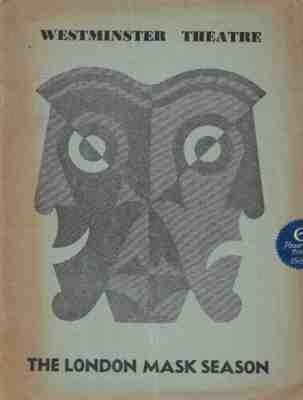
Michael Redgrave "THE FAMILY REUNION" T. S. Eliot 1939 London Premiere Program
(The production premiered on March 21st, 1939 at London's Westminster Theatre and ran for only 38 performances.).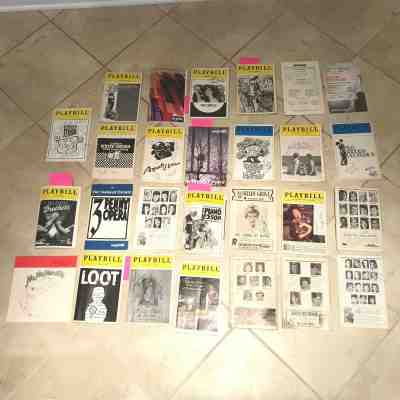
Sold on eBay Aug, 18th 2020
Lot of 27 Mostly Playbill Broadway Theater Cast Signed Magazine Programs
Lot of 27 Mostly Playbill Broadway Theater Cast Signed Magazine Programs. Comes with all the ones shown. With various conditions of wear. Some signed on the cover and some signed on the inside. Notable signatures include Jane Powell, Kevin Bacon, Ruth Brown, Carol Woods, Stewart Grawger, Hurly Burly, Kevin Spacey, Ruby Keeler, Kathleen Turner, Ashley Judd, Alec Baldwin, Vanessa Redgrave, Sting, Pamela Reed, and Maggie Smith.<br />PLEASE NOTE THAT FOR MANY OF MY LISTINGS THERE ARE MORE THAN 6 PICTURES. MANY BUYERS WHO ARE NOT FREQUENT EBAY USERS ARE NOT AWARE THAT THERE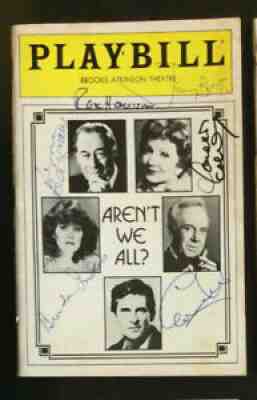
Sold on eBay Dec 03, 2021
AREN'T WE ALL? 1985 Playbill Signed JEREMY BRETT REX HARRISON +4 / Autographed
Aren't We All?. original 1985 Playbill signed by the entire main cast: Jeremy Brett, Rex Harrison, Claudette Colbert, Lynn Redgrave, George Rhodes and Brenda Forbes. Very Good condition. Get 'em while they last!
Sold on eBay Apr 24, 2023
Vanessa Redgrave (Cast Signed) "ORPHEUS DESCENDING" Tammy Grimes 1989 Playbill
Find many great new & used options and get the best deals for Vanessa Redgrave (Cast Signed) "ORPHEUS DESCENDING" Tammy Grimes 1989 Playbill at the best online prices at eBay! Free shipping for many products!
Sold on eBay May 31st, 2024
LOT OF 53 Vintage Playbills - Colonial Theatre - Boston, 1960's 1970's
LOT OF 53 Vintage Playbills Colonial TheatreThese listed are all from the Colonial Theatre, Early 1960's , Some 1970's , A couple 1980's· Romantic Comedy · Chicago· Sugar Babies, Carol Channing · The Prisoner of Second Avenue· King of Hearts · Woman of the Year, Laren Bacall · Bubbling Brwon Sugar· Odyssey, Yul Brenner· Habeas Corpus· Saraua· On the Twentieth Century· Tribute, Jack Lemmon· Seesaw, Lucie Arnaz· Dancin’· Cyrano, Christopher Plummer· Good News· Hellzapoppin , Jerry Lewis , Lynn Redgrave· A Man for all Seasons· The loves of Cass McGuire· The Zulu and the Zayda· Wait until Dark , Lee Remick , Robert Duvall· From the Second City· Follies· I DO! I DO!· 1776· Play It Again Sam , Woody Allen· Plaza Suite, George C. Scott· How Now Dow Jones· Hallelujah Baby!· Flora the Red Menace, Liza Minnelli· Fade Out-Fade In , Carol Burnett, Jack Cassidy· Half a Sixpence· A Delicate Balance· A Moon for Misbegotten· The Odd Couple , Walter Matthau· Camelot· How To Succeed in Business Without Really Trying· The Lion In Winter· A Time For Singing· Beekman Place· On A Clear Day You Can See Forever· High Spirits· Jennie , Mary Martin· Butterflies are Free· Everybody Out , The Castle is Sinking· Lovers , Art Carney· Barefoot in the Park· Man of LaMancha· The Devils· The Girl Who Came to Supper· Who’s Afraid of Virginia Woolf?· Promises, Promises, Jerry Orbach, Jill O’Hara· Comedy Feel free to email with any questions, concerns or additional Photos Free Priority Shipping No International Shipping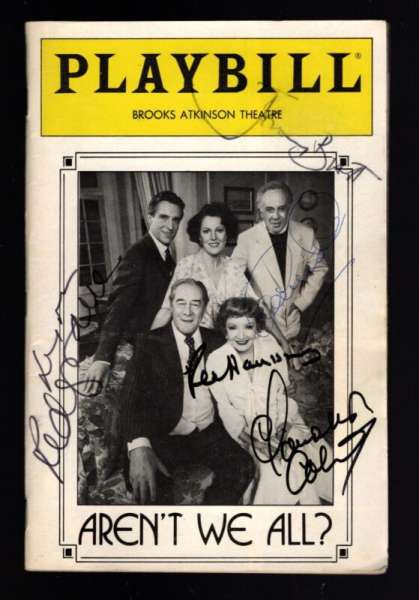
Sold on eBay October 9th, 2024
1985 Aren’t We All Playbill Signed by Rex Harrison Claudette Colbert Lynn Redgra
This is for an original 1985 Playbill from the Brooks Atkinson Theatre which has been signed by every member of the starring cast. The playbill features nice bold and clear signatures of stars Rex Harrison, Claudette Colbert, Lynn Redgrave, George Rose and Jeremy Brett. Everyone enjoys collecting playbills, but everyone LOVES collecting autographed versions especially if the entire starring cast is pictured and each has signed beautifully. A great piece for any collector and impossible to duplicate. Check out the scans and email with any questions. Combined shipping always available for multiple purchases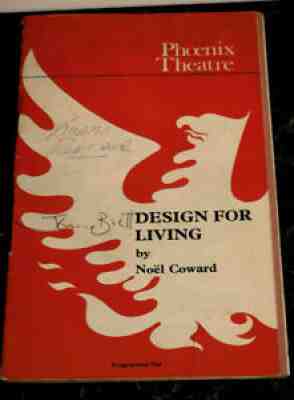
Sold on eBay Feb 16, 2022
DESIGN FOR LIVING PLAYBILL SIGNED BY VANESSA REDGRAVE AND JEREMY BRETT
This Playbill features the original cast from London's first West End revival in what was once denounced as Coward's "disgusting" play. Both REDGRAVE and BRETT have signed twice -- once on the cover and again inside the Playbill.
Sold on eBay May 5th, 2024
*LEGENDARY DANCER ISADORA DUNCAN RARE 1916 DANCE PROGRAM*
A rare large original 1916 dance program for the legendary Isadora Duncan. Four pages. Dimensions ten and three quarters by five and a half inches. Light wear otherwise good. See Isadora Duncan's extraordinary biography below. Shipping discounts for multiple purchases. Inquiries always welcome. Please visit my other eBay items for more early ballet and dance memorabilia, early theatre, opera, film, magic, and historical autographs, photographs, programs and broadsides, and great actor and actress cabinet photos and CDV's.From Isadora Duncan (May 26, 1877 or May 27, 1878[a] – September 14, 1927) was an American and French dancer who performed to acclaim throughout Europe. Born in California, she lived in Western Europe and the Soviet Union from the age of 22 until her death at age 50, when her scarf became entangled in the wheels and axle of the car in which she was riding.Isadora Duncan was born in San Francisco, the youngest of the four children of Joseph Charles Duncan (1819–1898), a banker, mining engineer and connoisseur of the arts, and Mary Isadora Gray (1849–1922). Her brothers were Augustin Duncan and Raymond Duncan;[2] her sister, Elizabeth Duncan, was also a dancer.[3][4] Soon after Isadora's birth, her father was exposed to illegal bank dealings, and the family became extremely poor.[2]Her parents divorced when she was an infant,[5] and her mother moved with her family to Oakland, California, where she worked as a seamstress and piano teacher. From ages six to ten, Isadora attended school, but she dropped out, finding it constricting. As her family was very poor, she and her three siblings earned money by teaching dance to local children.[2]In 1896, Duncan became part of Augustin Daly's theater company in New York, but she soon became disillusioned with the form and craved a different environment with less of a hierarchy.[6] Her father, along with his third wife and their daughter, died in 1898 when the British passenger steamer SS Mohegan ran aground off the coast of Cornwall [7]WorkPhoto by Arnold Genthe of Duncan performing barefoot during her 1915–1918 American tourAbraham Walkowitz's Isadora Duncan #29, one of many works of art she inspired.Duncan began her dancing career at a very early age by giving lessons in her home to neighbourhood children, and this continued through her teenage years.[8] Her novel approach to dance was evident in these early classes, in which she "followed [her] fantasy and improvised, teaching any pretty thing that came into [her] head".[9] A desire to travel brought her to Chicago, where she auditioned for many theater companies, finally finding a place in Augustin Daly's company. This took her to New York City where her unique vision of dance clashed with the popular pantomimes of theater companies.[10] In New York, Duncan took some classes with Marie Bonfanti but was quickly disappointed in ballet routine.Feeling unhappy and unappreciated in America, Duncan moved to London in 1898. She performed in the drawing rooms of the wealthy, taking inspiration from the Greek vases and bas-reliefs in the British Museum.[11][12] The earnings from these engagements enabled her to rent a studio, allowing her to develop her work and create larger performances for the stage.[13] From London, she traveled to Paris, where she was inspired by the Louvre and the Exposition Universelle of 1900.[14]In 1902, Loie Fuller invited Duncan to tour with her. This took Duncan all over Europe as she created new works using her innovative technique,[15] which emphasized natural movement in contrast to the rigidity of tradition ballet.[16] She spent most of the rest of her life touring Europe and the Americas in this fashion.[17] Despite mixed reaction from critics, Duncan became quite popular for her distinctive style and inspired many visual artists, such as Antoine Bourdelle, Auguste Rodin, Arnold Rönnebeck, and Abraham Walkowitz, to create works based on her.[18]Duncan disliked the commercial aspects of public performance, such as touring and contracts, because she felt they distracted her from her real mission, namely the creation of beauty and the education of the young.[citation needed] To achieve her mission, she opened schools to teach young women her philosophy of dance. The first was established in 1904 in Berlin Grunewald Germany. This institution was the birthplace of the "Isadorables" (Anna, Maria-Theresa, Irma, Liesel, Gretel, and Erika[19]), Duncan's protégées who would continue her legacy.[20] Duncan legally adopted all six girls in 1919, and they took her last name.[21] After about a decade in Berlin, Duncan established a school in Paris that was shortly closed because of the outbreak of World War I.[22]In 1910, Duncan met the occultist Aleister Crowley at a party, an episode recounted by Crowley in his Confessions [23] He refers to Duncan as "Lavinia King", and used the same invented name for her in his novel Moonchild. Crowley wrote of Duncan that she "has this gift of gesture in a very high degree. Let the reader study her dancing, if possible in private than in public, and learn the superb unconsciousness — which is magical consciousness — with which she suits the action to the melody."[24] Crowley was, in fact, more attracted to Duncan's bohemian companion Mary Dempsey (a.k.a. Mary D'Este or Desti), with whom he had an affair. Desti had come to Paris in 1901 where she soon met Duncan, and the two became inseparable. Desti, who also appeared in Moonchild (as "Lisa la Giuffria") and became a member of Crowley's occult order,[b] later wrote a memoir of her experiences with Duncan.[25]In 1911, the French fashion designer Paul Poiret rented a mansion — Pavillon du Butard in La Celle Saint Cloud — and threw lavish parties, including one of the more famous grandes fêtes, La fête de Bacchus on June 20, 1912, re-creating the Bacchanalia hosted by Louis XIV at Versailles. Isadora Duncan, wearing a Greek evening gown designed by Poiret,[26] danced on tables among 300 guests; 900 bottles of champagne were consumed until the first light of day.[26]Duncan c. 1916–1918Duncan said to have posed for the photographer Eadweard Muybridge,[27] placed an emphasis on "evolutionary" dance motion, insisting that each movement was born from the one that preceded it, that each movement gave rise to the next, and so on in organic succession. Her dancing defined the force of progress, change, abstraction and liberation. In France, as elsewhere, Duncan delighted her audience.[28]In 1914, Duncan moved to the United States and transferred her school there. A townhouse on Gramercy Park was provided for its use, and its studio was nearby, on the northeast corner of 23rd Street and Fourth Avenue (now Park Avenue South).[29] Otto Kahn, the head of Kuhn, Loeb & Co., gave Duncan use of the very modern Century Theatre at West 60th Street and Central Park West for her performances and productions, which included a staging of Oedipus Rex that involved almost all of Duncan's extended entourage and friends.[30] During her time in New York, Duncan posed for a number of studies by the photographer Arnold Genthe.Duncan had been due to leave the United States in 1915 aboard the RMS Lusitania on its ill-fated voyage, but historians believe her financial situation at the time drove her to choose a more modest crossing.[31] In 1921, Duncan's leftist sympathies took her to the Soviet Union, where she founded a school in Moscow. However, the Soviet government's failure to follow through on promises to support her work caused her to return to the West and leave the school to her protégée Irma.[32] In 1924, Duncan composed a dance routine called Varshavianka to the tune of the Polish revolutionary song known in English as Whirlwinds of Danger [33]Philosophy and techniqueDuncan in a Greek-inspired pose and wearing her signature Greek tunic. She took inspiration from the classical Greek arts and combined them with an American athleticism to form a new philosophy of dance, in opposition to the rigidity of traditional ballet.Breaking with convention, Duncan imagined she had traced dance to its roots as a sacred art.[34] She developed from this notion a style of free and natural movements inspired by the classical Greek arts, folk dances, social dances, nature and natural forces as well as an approach to the new American athleticism which included skipping, running, jumping, leaping and tossing [citation needed]Duncan's philosophy of dance moved away from rigid ballet technique and towards what she perceived as natural movement. To restore dance to a high art form instead of merely entertainment, she strove to connect emotions and movement: "I spent long days and nights in the studio seeking that dance which might be the divine expression of the human spirit through the medium of the body's movement."[35] She believed dance was meant to encircle all that life had to offer—joy and sadness. Duncan took inspiration from ancient Greece and combined it with an American love of freedom. Her movement was feminine and arose from the deepest feelings in her body. This is exemplified in her revolutionary costume of a white Greek tunic and bare feet. Inspired by Greek forms, her tunics also allowed a freedom of movement that corseted ballet costumes and pointe shoes did not.[36] Costumes were not the only inspiration Duncan took from Greece: she was also inspired by ancient Greek art, and utilized some of its forms in her movement (see image) [37]Duncan wrote of American dancing: "let them come forth with great strides, leaps and bounds, with lifted forehead and far-spread arms, to dance."[38] Her focus on natural movement emphasized steps, such as skipping, outside of codified ballet technique. Duncan also cited the sea as an early inspiration for her movement.[39] Also, she believed movement originated from the solar plexus, which she thought was the source of all movement.[35] It is this philosophy and new dance technique that garnered Duncan the title of the creator of modern dance.Photo studies of Isadora Duncan made in New York by Arnold Genthe during her visits to America in 1915–1918 Personal lifeDuncan with her children Deirdre and Patrick, in 1913In both professional and private life, Duncan flouted traditional mores and morality. She was bisexual[40] and an atheist,[41] and alluded to her communism during her last United States tour, in 1922–23: she waved a red scarf and bared her breast on stage in Boston, proclaiming, "This is red! So am I!"[42]Duncan bore two children, both out of wedlock. The first, Deirdre Beatrice (born September 24, 1906), by theatre designer Gordon Craig, and the second, Patrick Augustus (born May 1, 1910),[43] by Paris Singer, one of the many sons of sewing machine magnate Isaac Singer. Both children drowned in the care of their nanny in 1913 when their runaway car went into the Seine [43]Following the accident, Duncan spent several months recuperating in Corfu with her brother and sister. She then spent several weeks at the Viareggio seaside resort with the actress Eleonora Duse. The fact that Duse had just left a relationship with the rebellious and epicene young feminist Lina Poletti fueled speculation as to the nature of Duncan and Duse's relationship, but there has never been any indication that the two were involved romantically [44]Duncan and Sergei YeseninIn her autobiography, Duncan relates that she begged a young Italian stranger, the sculptor Romano Romanelli,[45] to sleep with her because she was desperate for another baby. She became pregnant by him, and gave birth to a son on August 13, 1914; the infant died shortly after birth [46][47]In 1921, after the end of the Russian Revolution, Duncan moved to Moscow where she met the acclaimed poet Sergei Yesenin, who was 18 years her junior. On May 2, 1922, they married, and Yesenin accompanied her on a tour of Europe and the United States. However, the marriage was brief, and in May 1923 he left Duncan and returned to Moscow. Two years later, on December 28, 1925, Yesenin was found dead in his room in the Hotel Angleterre in St Petersburg in an apparent suicide [48]Duncan had a relationship with the poet and playwright Mercedes de Acosta, as documented in numerous revealing letters they wrote to each other.[49] In one, Duncan wrote, "Mercedes, lead me with your little strong hands and I will follow you – to the top of a mountain. To the end of the world. Wherever you wish."[50]Later lifeBy the late 1920s, Duncan's performing career had dwindled, and she became as notorious for her financial woes, scandalous love life and all too frequent public drunkenness as for her contributions to the arts. She spent her final years moving between Paris and the Mediterranean, running up debts at hotels. She spent short periods in apartments rented on her behalf by a decreasing number of friends and supporters, many of whom attempted to assist her in writing an autobiography. They hoped it might be successful enough to support her.[citation needed] In a reminiscent sketch, Zelda Fitzgerald wrote how she and F. Scott Fitzgerald, her husband, sat in a Paris cafe watching a somewhat drunk Duncan. He would speak of how memorable it was, but what Zelda recalled was that while all eyes were watching Duncan, Zelda was able to steal the salt and pepper shakers from the table.[51]In his book Isadora, an Intimate Portrait, Sewell Stokes, who met Duncan in the last years of her life, describes her extravagant waywardness. Duncan's autobiography My Life was published in 1927. The Australian composer Percy Grainger called Isadora's autobiography a "life-enriching masterpiece [52]DeathDuncan s tomb at Père Lachaise CemeteryOn the night of September 14, 1927, in Nice, France, Duncan was a passenger in an Amilcar CGSS automobile owned by Benoît Falchetto, a French-Italian mechanic. She wore a long, flowing, hand-painted silk scarf, created by the Russian-born artist Roman Chatov, a gift from her friend Mary Desti, the mother of American film director Preston Sturges. Desti, who saw Duncan off, had asked her to wear a cape in the open-air vehicle because of the cold weather, but she would only agree to wear the scarf.[53] As they departed, she reportedly said to Desti and some companions, "Adieu, mes amis. Je vais à la gloire !" ("Farewell, my friends. I go to glory!"); but according to the American novelist Glenway Wescott, Desti later told him that Duncan's actual parting words were, "Je vais à l'amour" ("I am off to love"). Desti considered this embarrassing, as it suggested that she and Falchetto were going to her hotel for a tryst.Her silk scarf, draped around her neck, became entangled around the open-spoked wheels and rear axle, pulling her from the open car and breaking her neck.[1] Desti said she called out to warn Duncan about the scarf almost immediately after the car left. Desti brought Duncan to the hospital, where she was pronounced dead.[53]As The New York Times noted in its obituary, Duncan "met a tragic death at Nice on the Riviera." "According to dispatches from Nice, Duncan was hurled in an extraordinary manner from an open automobile in which she was riding and instantly killed by the force of her fall to the stone pavement."[57] Other sources noted that she was almost decapitated by the sudden tightening of the scarf around her neck.[58] The accident gave rise to Gertrude Stein's mordant remark that "affectations can be dangerous".[59] At the time of her death, Duncan was a Soviet citizen. Her will was the first of a Soviet citizen's to be probated in the U.S.[60]Duncan was cremated, and her ashes were placed next to those of her children[61] in the columbarium at Père Lachaise Cemetery in Paris.[62] On the headstone of her grave is inscribed École du Ballet de l'Opéra de Paris ("Ballet School of the Opera of Paris ) LegacyDuncan is known as "The Mother of Dance". While her schools in Europe did not last long, Duncan's work had impact in the art and her style is still danced based upon the instruction of Maria-Theresa Duncan,[63] Anna Duncan,[64] and Irma Duncan,[65] three of her six adopted daughters. The adoption process was never verified, but all six of Isadora's dancers did change their last name to Duncan. Through her sister, Elizabeth, Duncan's approach was adopted by Jarmila Je?ábková from Prague where her legacy persists.[66] By 1913 she was already being celebrated. When the Théâtre des Champs Élysées was built, Duncan's likeness was carved in its bas-relief over the entrance by sculptor Antoine Bourdelle and included in painted murals of the nine muses by Maurice Denis in the auditorium. In 1987, she was inducted into the National Museum of Dance and Hall of Fame.Anna, Lisa,[67] Theresa and Irma, pupils of Isadora Duncan's first school, carried on the aesthetic and pedagogical principles of Isadora's work in New York and Paris. Choreographer and dancer Julia Levien was also instrumental in furthering Duncan's work through the formation of the Duncan Dance Guild in the 1950s and the establishment of the Duncan Centenary Company in 1977 [68]Another means by which Duncan's dance techniques were carried forth was in the formation of the Isadora Duncan Heritage Society, by Mignon Garland, who had been taught dance by two of Duncan's key students. Garland was such a fan that she later lived in a building erected at the same site and address as Duncan, attached a commemorative plaque near the entrance, which is still there as of 2016. Garland also succeeded in having San Francisco rename an alley on the same block from Adelaide Place to Isadora Duncan Lane.[69][70]In medicine, the Isadora Duncan Syndrome refers to injury or death consequent to entanglement of neckwear with a wheel or other machinery [71]In popular cultureDuncan has attracted literary and artistic attention from the 1920s to the present, in novels, film, ballet, theatre, music, and poetry.Duncan has been portrayed in novels including Aleister Crowley's Moonchild (as 'Lavinia King'), published in 1923,[72] and Upton Sinclair's World's End (1940) and Between Two Worlds (1941), the first two novels in his Pulitzer Prize winning Lanny Budd series.[73] She is also the subject of Amelia Gray's novel Isadora (2017).[74] Two characters in the A Series of Unfortunate Events series of novels are named after her, Isadora Quagmire and Duncan Quagmire [75]Among the films featuring Duncan are:The 1966 BBC biopic by Kenneth Russell, Isadora Duncan, the Biggest Dancer in the World, which was introduced by Duncan's biographer, Sewell Stokes, Duncan was played by Vivian Pickles.[76]The 1968 film Isadora, nominated for the Palme d'Or at Cannes, stars Vanessa Redgrave as Duncan. The film was based in part of Duncan's autobiography. Redgrave was nominated for the Academy Award for Best Actress for her performance as Duncan [76][77]Archival footage of Duncan was used in the 1985 popular documentary That's Dancing [78][79]A 1989 documentary, Isadora Duncan: Movement from the Soul, was nominated for the Grand Jury Prize at the 1989 Sundance Film Festival [80]Ballets based on Duncan include:In 1976 Frederick Ashton created a short ballet entitled Five Brahms Waltzes in the Manner of Isadora Duncan for Lynn Seymour of the Royal Ballet, in which "Ashton fused Duncan's style with an imprint of his own"; Marie Rambert claimed after seeing it that it was exactly as she remembered Duncan dancing.[81]In 1981, she was the subject of a ballet, Isadora, written and choreographed by the Royal Ballet's Kenneth MacMillan, and performed at Covent Garden.[82]On the theatre stage, Duncan is portrayed in:A 1991 stage play When She Danced by Martin Sherman about Duncan's later years, won the Evening Standard Award for Vanessa Redgrave as Best Actress.[83]In 2016, Lily-Rose Depp portrayed Duncan in The Dancer, a French biographical musical drama of dancer Loie Fuller [84]Duncan is featured in music in:The popular 1970s TV sitcom Maude mentions her in its theme song: "Isadora was the first bra burner Ain t ya glad she showed up?"Celia Cruz recorded a track titled Isadora Duncan with the Fania All-Stars for the album Cross Over released in 1979.[85]Rock musician Vic Chesnutt included a song about Duncan on his debut album Little.[86]Rock band Burden of a day included a song about Duncan on their album the poem Fever 103 by Sylvia Plath, the speaker alludes to Isadora's scarves.
Sold on eBay September 17th, 2024
Lynn Redgrave (Signed) "BLACK COMEDY" Michael Crawford 1967 Premiere Playbill
I'm currently listing a large number of playbills representing some of the most memorable Broadway performances of the 1950's and 1960's ......... This is a rare autographed February 12th, 1967 PREMIERE PERFORMANCE playbill from the Original Broadway production of the PETER SHAFFER series "BLACK COMEDY" preceded by "WHITE LIES" at the Ethel Barrymore Theatre in New York City. (The production opened February 12th, 1967 and ran for 337 performances.) ..... The plays starred GERALDINE PAGE, MICHAEL CRAWFORD (in his Broadway debut), LYNN REDGRAVE (who signed the title page) and DONALD MADDEN and featured PETER BULL, CAMILA ASHLAND, PIERRE EPSTEIN and MICHAEL MILLER ..... CREDITS: Book by PETER SHAFFER; Sets and Costumes designed by ALAN TAGG; Directed by JOHN DEXTER; Produced by ALEXANDER H. COHEN ..... DETAILS: The 66 page playbill measures 6" X 9" inches and includes full production credits, cast list, synopsis of scenes and bios of each of the actors but with the exception of the front cover, no cast photos ..... CONDITION: With the exception of light edge wear, this playbill is in excellent condition and will make a wonderful addition to the collection of any theatre aficionado or historian. This item will be carefully packaged in a protective, carded sleeve and backed by stiff cardboard. Pay me securely with any major credit card through PayPal!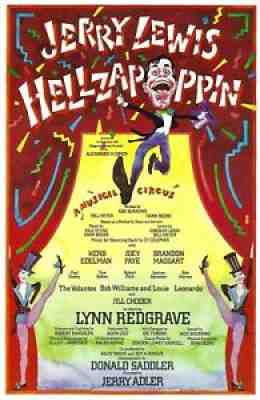
Sold on eBay Apr 08, 2022
Jerry Lewis "HELLZAPOPPIN" Lynn Redgrave 1976 FLOP Washington, D.C. Tryout Flyer
Find many great new & used options and get the best deals for Jerry Lewis "HELLZAPOPPIN" Lynn Redgrave 1976 FLOP Washington, D.C. Tryout Flyer at the best online prices at eBay! Free shipping for many products!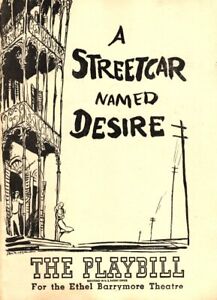
Sold on eBay November 14th, 2023
*GREAT AMERICAN PLAYWRIGHT TENNESSEE WILLIAMS 1949 STREETCAR PROGRAM BRANDO*
eBay A rare original March 1949 program for Tennessee Williams's brilliant play A Streetcar Named Desire with Marlon Brando, Jessica Tandy, Karl Malden, and Kim Hunter. Thirty two pages. Dimensions nine by six and a half inches. Light wear otherwise good. See Tennessee Williams's extraordinary biography and the story of the play below. Buyer pays first class insured shipping. Overseas shipping by Reistered Airmail. Shipping discounts for multiple purchases. Inquiries always welcome. Please visit my other eBay items for more early theatre, opera, film and historical autographs, photographs and programs and great actor and actress cabinet photos and CDV's. From Wikipedia: Thomas Lanier "Tennessee" Williams III (March 26, 1911– February 25, 1983) was an American playwright. Along with Eugene O'Neill and Arthur Miller, he is considered among the three foremost playwrights of 20th-century American drama.[1]After years of obscurity, at age 33 he became suddenly famous with the success of The Glass Menagerie (1944) in New York City.This play closely reflected his own unhappy family background. It was the first of a string of successes, including A Streetcar Named Desire (1947), Cat on a Hot Tin Roof (1955), and Sweet Bird of Youth(1959). With his later work, he attempted a new style that did not appeal to audiences. Increasing alcohol and drug dependence inhibited his creative expression. His drama A Streetcar Named Desire is often numbered on short lists of the finest American plays of the 20th century alongside Eugene O'Neill's Long Day's Journey into Night and Arthur Miller's Death of a Salesman [1]Much of Williams' most acclaimed work has been adapted for the cinema. He also wrote short stories, poetry, essays and a volume of memoirs. In 1979, four years before his death, Williams was inducted into the American Theater Hall of Fame.Thomas Lanier Williams III was born in Columbus, Mississippi, of English, Welsh, and Huguenot ancestry, the second child of Edwina Dakin (August 9, 1884 – June 1, 1980) and Cornelius Coffin "C. C." Williams (August 21, 1879 – March 27, 1957).[2] His father was a traveling shoe salesman who became alcoholic and was frequently away from home. His mother, Edwina, was the daughter of Rose O. Dakin, a music teacher, and the Reverend Walter Dakin, an Episcopal priest from Illinois who was assigned to a parish in Clarksdale, Mississippi, shortly after Williams' birth. Williams lived in his parsonage with his family for much of his early childhood and was close to his grandparents.He had two siblings, older sister Rose Isabel Williams and younger brother Walter Dakin Williams [4](1919[5]–2008) [6]As a young child Williams nearly died from a case of diphtheria that left him weak and virtually confined to his house during a period of recuperation that lasted a year. At least in part as a result of his illness, he was less robust as a child than his father wished. Cornelius Williams, a descendant of hearty East Tennessee pioneer stock, had a violent temper and was a man prone to use his fists. He regarded what he thought was his son's effeminacy with disdain. Edwina, locked in an unhappy marriage, focused her overbearing attention almost entirely on her frail young son.[7] Many critics and historians note that Williams drew from his own dysfunctional family in much of his writing.[1]When Williams was eight years old, his father was promoted to a job at the home office of the International Shoe Company in St. Louis, Missouri. His mother's continual search for what she considered to be an appropriate address, as well as his father's heavy drinking and loudly turbulent behavior, caused them to move numerous times around St. Louis. Williams attended Soldan High School, a setting he referred to in his play The Glass Menagerie.[8] Later he studied at University City High School.[9][10] At age 16, Williams won third prize (five dollars, = $70± in 2017) for an essay published in Smart Set, titled "Can a Good Wife Be a Good Sport?" A year later, his short story "The Vengeance of Nitocris" was published in the August 1928 issue of the magazine Weird Tales.[11]That same year he first visited Europe with his maternal grandfather Dakin EducationFrom 1929 to 1931, Williams attended the University of Missouri, in Columbia, where he enrolled in journalism classes.[12] He was bored by his classes and distracted by unrequited love for a girl. Soon he began entering his poetry, essays, stories, and plays in writing contests, hoping to earn extra income. His first submitted play was Beauty Is the Word (1930), followed by Hot Milk at Three in the Morning (1932).[13] As recognition for Beauty, a play about rebellion against religious upbringing, he became the first freshman to receive honorable mention in a writing competition [14]At University of Missouri, Williams joined the Alpha Tau Omega fraternity, but he did not fit in well with his fraternity brothers. According to Hale, the "brothers found him shy and socially backward, a loner who spent most of his time at the typewriter." After he failed a military training course in his junior year, his father pulled him out of school and put him to work at the International Shoe Company factory. Although Williams, then 21, hated the monotony, the job "forced him out of the pretentious gentility" of his upbringing, which had, according to Hale, "tinged him with [his mother's] snobbery and detachment from reality."[14] His dislike of his new nine-to-five routine drove him to write even more than before. He set himself a goal of writing one story a week, working on Saturday and Sunday, often late into the night. His mother recalled his intensity:Tom would go to his room with black coffee and cigarettes and I would hear the typewriter clicking away at night in the silent house. Some mornings when I walked in to wake him for work, I would find him sprawled fully dressed across the bed, too tired to remove his clothes [15]Overworked unhappy, and lacking any further success with his writing, by his twenty-fourth birthday Williams had suffered a nervous breakdown and left his job. He drew from memories of this period, and a particular factory co-worker, to create the character Stanley Kowalski in A Streetcar Named Desire.[14] By the mid-1930s his mother separated from his father, due to C.C.'s worsening alcoholism and abusive temper (part of his ear was bitten off in a poker game fight). They never divorced.In 1936, Williams enrolled at Washington University in St. Louis; while there, he wrote the play Me, Vashya (1937). In the autumn of 1937, he transferred to the University of Iowa, where he graduated with a B.A. in English in August 1938.[16] He later studied at the Dramatic Workshop of The New School in New York City. Speaking of his early days as a playwright and referring to an early collaborative play called Cairo, Shanghai, Bombay!, produced while he was a part of an amateur summer theater group in Memphis, Tennessee, Williams wrote, "The laughter ... enchanted me. Then and there the theatre and I found each other for better and for worse. I know it's the only thing that saved my life."[17] Around 1939, he adopted "Tennessee Williams" as his professional name.Literary influencesWilliams writings include mention of some of the poets and writers he most admired in his early years: Hart Crane, Arthur Rimbaud, Anton Chekhov (from the age of ten), William Shakespeare, Clarence Darrow, D. H. Lawrence, Katherine Mansfield, August Strindberg, William Faulkner, Thomas Wolfe, and Emily Dickinson. In later years he also referred to William Inge, James Joyce, and Ernest Hemingway; of Hemingway, he said "[his] great quality, aside from his prose style, is this fearless expression of brute nature [15]:xiCareerIn the late 1930s, as Williams struggled to gain production and an audience for his work, he worked at a string of menial jobs that included a notably disastrous stint as caretaker on a chicken ranch in Laguna Beach, California. In 1939, with the help of his agent Audrey Wood, he was awarded a $1,000 grant [2017 equivalent $17,000+] from the Rockefeller Foundation in recognition of his play Battle of Angels; it was produced in Boston in 1940, but poorly received.Using some of the Rockefeller funds, Williams moved to New Orleans in 1939 to write for the Works Progress Administration (WPA), a federally funded program begun by President Franklin D. Roosevelt created to put people to work. In addition to sponsoring construction and infrastructure projects, it hired many artists, musicians and writers, to create local cultural programs, to write state histories, and to create art for public buildings. It was critical to the survival of many such artists during the Great Depression. Williams lived for a time in New Orleans' French Quarter; first at 722 Toulouse Street, the setting of his 1977 play Vieux Carré. (The building is now part of The Historic New Orleans Collection )[18] The Rockefeller grant brought him to the attention of the Hollywood film industry and Williams received a six-month contract as a writer from the Metro Goldwyn Mayer film studio, earning $250 weekly.During the winter of 1944–45, his "memory play" The Glass Menagerie, developed from his 1943 short story "Portrait of a Girl in Glass", was successfully produced in Chicago and garnered good reviews. It moved to New York where it became an instant and enormous hit, and had a long Broadway run. It explores the lives of a young man named Tom, his disabled sister, Laura, and their controlling mother Amanda, who tries to make a match between Laura and a gentleman caller. Williams' use of his own familial relationships as inspiration for the play is clear. Elia Kazan (who directed many of Williams' greatest successes) said of Williams: "Everything in his life is in his plays, and everything in his plays is in his life."[19] The Glass Menagerie won the award for the best play of the season, the New York Drama Critics' Circle Award.The huge success of his next play, A Streetcar Named Desire in 1947 secured his reputation as a great playwright. Although widely celebrated and increasingly wealthy, Williams was still restless and insecure, always gripped by fear that he would not be able to replicate his success. During the late 1940s and 1950s, Williams began to travel widely with his partner Frank Merlo (1922 – September 21, 1963), often spending summers in Europe. To stimulate his writing he moved often, living in cities including New York, New Orleans, Key West, Rome, Barcelona, and London. Williams wrote, "Only some radical change can divert the downward course of my spirit, some startling new place or people to arrest the drift, the drag [20]Williams arriving at funeral services for Dylan Thomas, 1953Between 1948 and 1959 Williams had seven of his plays produced on Broadway: Summer and Smoke (1948), The Rose Tattoo (1951), Camino Real (1953), Cat on a Hot Tin Roof (1955), Orpheus Descending (1957), Garden District(1958), and Sweet Bird of Youth (1959). By 1959 he had earned two Pulitzer Prizes, three New York Drama Critics' Circle Awards, three Donaldson Awards, and a Tony Award.Williams' work reached wide audiences in the early 1950s when The Glass Menagerie and A Streetcar Named Desirewere adapted as motion pictures. Later plays also adapted for the screen included Cat on a Hot Tin Roof, The Rose Tattoo, Orpheus Descending, The Night of the Iguana, Sweet Bird of Youth, and Summer and Smoke.After the extraordinary successes of the 1940s and 1950s, he had more personal turmoil and theatrical failures in the 1960s and 1970s. Although he continued to write every day, the quality of his work suffered from his increasing alcohol and drug consumption, as well as occasional poor choices of collaborators [21] In 1963, his partner Frank Merlo died.Consumed by depression over the loss, and in and out of treatment facilities while under the control of his mother and younger brother Dakin, Williams spiraled downward. His plays Kingdom of Earth (1967), In the Bar of a Tokyo Hotel(1969), Small Craft Warnings (1973), The Two Character Play (also called Out Cry, 1973), The Red Devil Battery Sign(1976), Vieux Carré (1978), Clothes for a Summer Hotel (1980), and others were all box office failures. Relentlessly negative press notices wore down his spirit. His last play, A House Not Meant To Stand, was produced in Chicago in 1982. Despite largely positive reviews, it ran for only 40 performances Critics and audiences alike failed to appreciate Williams' new style and the approach to theater he developed during the 1970s. Williams said, "I've been working very hard since 1969 to make an artistic comeback there is no release short of death" (Spoto 335), and "I want to warn you, Elliot, the critics are out to get me. You'll see how vicious they are. They make comparisons with my earlier work, but I'm writing differently now" (Spoto 331). Leverich explains that Williams to the end was concerned with "the depths and origin of human feelings and motivations, the difference being that he had gone into a deeper, more obscure realm, which, of course, put the poet in him to the fore, and not the playwright who would bring much concern for audience and critical reaction" (xxiii).In addition to struggling with changing audience tastes, Williams had to deal with changes in the business model of the theatrical world. In the 1970s, free performances for charitable causes were becoming increasingly popular. The aging playwright found it a challenge to adapt to the times, although many of the changes in theater were due to his own legacy [citation needed] Despite the inferior quality of Williams's work compared to his creative peak 30 years earlier, he continued writing almost without a break.In 1974, Williams received the St. Louis Literary Award from the Saint Louis University Library Associates [22][23] In 1979, four years before his death, he was inducted into the American Theater Hall of Fame [24]Personal lifeThroughout his life Williams remained close to his sister Rose, who was diagnosed with schizophrenia as a young woman. In 1943, as her behavior became increasingly disturbing, she was subjected to a lobotomy. It required her to be for the rest of her life. As soon as he was financially able, Williams had her moved to a private institution just north of New York City, where he often visited her. He gave her a percentage interest in several of his most successful plays, the royalties from which were applied toward her care.[25][26] The devastating effects of Rose's illness may have contributed to Williams' alcoholism and his dependence on various combinations of amphetamines and barbiturates [27]After some early attempts at relationships with women, by the late 1930s Williams had finally accepted his homosexuality. In New York City he joined a gay social circle that included fellow writer and close friend Donald Windham (1920–2010) and his then partner Fred Melton. In the summer of 1940, Williams initiated an affair with Kip Kiernan (1918–1944), a young Canadian dancer he met in Provincetown, Massachusetts. When Kiernan left him to marry a woman, he was distraught. Kiernan's death four years later at age 26 was another heavy blow.On a 1945 visit to Taos, New Mexico, Williams met Pancho Rodríguez y González, a hotel clerk of Mexican heritage. Rodríguez was, by all accounts, a loving and loyal companion. But he was also prone to jealous rages and excessive drinking, and their relationship was tempestuous. In February I946 Rodríguez left New Mexico to join Williams in his New Orleans apartment. They lived and traveled together until late 1947, when Williams ended the affair. Rodríguez and Williams remained friends, however, and were in contact as late as the 1970s.Frank Merlo in Key West, 1950Williams spent the spring and summer of 1948 in Rome in the company of an Italian teenager, called "Rafaello" in Williams' Memoirs. He provided financial assistance to the younger man for several years afterward. Williams drew from this for his first novel, The Roman Spring of Mrs. Stone.235 E 58th Street, New York, New YorkTennessee Williams House, Key West, FloridaWhen he returned to New York that spring, Williams met and fell in love with Frank Merlo (1922–1963). An occasional actor of Sicilian heritage, he had served in the U.S. Navy in World War II. This was the enduring romantic relationship of Williams' life, and it lasted 14 years until infidelities and drug abuse on both sides ended it. Merlo, who had become Williams' personal secretary, took on most of the details of their domestic life. He provided a period of happiness and stability, acting as a balance to the playwright's frequent bouts with depression [28]Williams feared that, like his sister Rose, he would fall into insanity. His years with Merlo, in an apartment in Manhattan and a modest house in Key West, Florida, were Williams' happiest and most productive. Shortly after their breakup, Merlo was diagnosed with inoperable lung cancer. Williams returned to him and cared for him until his death on September 20, 1963.In the years following Merlo's death, Williams descended into a period of nearly catatonic depression and increasing drug use; this resulted in several and commitments to mental health facilities. He submitted to injections by Dr. Max Jacobson – known popularly as Dr. Feelgood – who used increasing amounts of amphetamines to overcome his depression. Jacobson combined these with prescriptions for the sedative Seconal to relieve his insomnia. During this time, influenced by his mother, a Roman Catholic convert, Williams joined the Catholic Church (though he later claimed that he never took his conversion seriously).[29] He was never truly able to recoup his earlier success, or to entirely overcome his dependence on prescription drugs.Edwina Dakin died in 1980 at the age of 95. Her health had begun failing during the early 1970s and she lived in a care facility from 1975 onward. Williams rarely saw his mother in her later years and retained a strong animosity toward her; friends described his reaction to her death as mixed [citation needed]As Williams grew older, he felt increasingly alone; he feared old age and losing his sexual appeal to younger gay men. In the 1970s, when he was in his 60s, Williams had a lengthy relationship with Robert Carroll, a Vietnam veteran and aspiring writer in his 20s. Williams had deep affection for Carroll and respect for what he saw as the younger man's talents. Along with Williams' sister Rose, Carroll was one of the two people who received a bequest in Williams' will [30]Williams described Carroll's behavior as a combination of "sweetness" and "beastliness". Because Carroll had a drug problem (as did Williams), friends such as Maria St. Just saw the relationship as "destructive". Williams wrote that Carroll played on his "acute loneliness" as an aging gay man. When the two men broke up in 1979, Williams called Carroll a "twerp", but they remained friends until Williams died four years later [31]DeathFirst page of the last will and testament of Tennessee WilliamsOn February 25, 1983, Williams was found dead at age 71 in his suite at the Hotel Elysée in New York. The Chief Medical Examiner of New York City, Elliot M. Gross, reported that Williams had choked to death from inhaling the plastic cap of a bottle of the type that might contain a nasal spray or eye solution.[32]He wrote in his will in 1972: "I, Thomas Lanier (Tennessee) Williams, being in sound mind upon this subject, and having declared this wish repeatedly to my close friends-do hereby state my desire to be buried at sea. More specifically, I wish to be buried at sea at as close a possible point as the American poet Hart Crane died by choice in the sea; this would be ascrnatible [sic], this geographic point, by the various books (biographical) upon his life and death. I wish to be sewn up in a canvas sack and dropped overboard, as stated above, as close as possible to where Hart Crane was given by himself to the great mother of life which is the sea: the Caribbean, specifically, if that fits the geography of his death. fits it [sic].".[33] But his brother Dakin Williams arranged for him to be buried at Calvary Cemetery, in St. Louis, Missouri, where his mother is buried [34]Williams left his literary rights to The University of the South in Sewanee, Tennessee, an Episcopal school, in honor of his maternal grandfather, Walter Dakin, an alumnus of the university. The funds support a creative writing program. When his sister Rose died in 1996 after many years in a mental institution, she bequeathed $7 million from her part of the Williams estate to The University of the South as well [35]Posthumous recognitionWilliams grave, Calvary Cemetery, St. Louis, MissouriFrom February 1 to July 21, 2011, to commemorate the 100th anniversary of his birth, the Harry Ransom Center at the University of Texas at Austin, the home of Williams' archive, exhibited 250 of his personal items. The exhibit, titled "Becoming Tennessee Williams," included a collection of Williams manuscripts, correspondence, photographs and artwork.[36] The Ransom Center holds the earliest and largest collections of Williams' papers, including all of his earliest manuscripts, the papers of his mother Edwina Williams, and those of his long-time agent Audrey Wood.[37]In late 2009, Williams was inducted into the Poets' Corner at the Cathedral of Saint John the Divine in New York. Performers and artists who took part in his induction included Vanessa Redgrave, playwright John Guare, Eli Wallach, Sylvia Miles, Gregory Mosher, and Ben Griessmeyer [38]The Tennessee Williams Theatre in Key West, Florida, is named for him. The Tennessee Williams Key West Exhibit on Truman Avenue houses rare Williams memorabilia, photographs, and pictures including his famous typewriter.At the time of his death, Williams had been working on a final play, In Masks Outrageous and Austere,[39] which attempted to reconcile certain forces and facts of his own life. This was a continuing theme in his work. As of September 2007, author Gore Vidal was completing the play, and Peter Bogdanovich was slated to direct its Broadway debut.[40] The play received its world premiere in New York City in April 2012, directed by David Schweizer and starring Shirley Knight as Babe.[41]The rectory of St. Paul's Episcopal Church in Columbus, Mississippi, where Williams's grandfather Dakin was rector at the time of Williams's birth, was moved to another location in 1993 for preservation. It was newly renovated in 2010 for use by the City of Columbus as the Tennessee Williams Welcome Center [42][43]Williams s literary legacy is represented by the literary agency headed by Georges Borchardt.In 1985, French author-composer Michel Berger wrote a song dedicated to Tennessee Williams, "Quelque chose de Tennessee" (Something of Tennessee), for Johnny Hallyday. It became one of the singer's most famous songs.Since 1986, the Tennessee Williams New Orleans Literary Festival has been held annually in New Orleans, Louisiana, in commemoration of the playwright. The festival takes place at the end of March to coincide with Williams's birthday [44]Since 2016, St. Louis, Missouri has held an annual Tennessee Williams' Festival, featuring a main production and related events such as literary discussions and new plays inspired by his work. In 2018 the festival produced A Streetcar Named Desire.The U.S. Postal Service honored Williams on a stamp in 1994 as part of its literary arts series.Williams is honored with a star on the St. Louis Walk of Fame [45]WorksCharacters in his plays are often seen as representations of his family members. Laura Wingfield in The Glass Menagerie was understood to be modeled on his sister Rose. Some biographers believed that the character of Blanche DuBois in A Streetcar Named Desire is also based on her.Amanda Wingfield in The Glass Menagerie was generally taken to represent Williams' mother, Edwina. Characters such as Tom Wingfield in The Glass Menagerie and Sebastian in Suddenly, Last Summer were understood to represent Williams himself. In addition, he used a lobotomy as a motif in Suddenly, Last Summer.The Pulitzer Prize for Drama was awarded to A Streetcar Named Desire in 1948 and to Cat on a Hot Tin Roof in 1955. These two plays were later adapted as highly successful films, by noted directors Elia Kazan (Streetcar), with whom Williams developed a very close artistic relationship, and Richard Brooks (Cat). Both plays included references to elements of Williams's life such as homosexuality, mental instability, and alcoholism Although The Flowering Peach by Clifford Odets was the preferred choice of the Pulitzer Prize jury in 1955, and Cat on a Hot Tin Roof was at first considered the weakest of the five shortlisted nominees, Joseph Pulitzer Jr., chairman of the Board, had seen Cat on a Hot Tin Roof and thought it worthy of the drama prize. The Board went along with him after considerable discussion [46]Williams wrote The Parade, or Approaching the End of a Summer when he was 29, and worked on it sporadically throughout his life. A semi autobiographical depiction of his 1940 romance with Kip Kiernan in Provincetown, Massachusetts, it was produced for the first time on October 1, 2006, in Provincetown by the Shakespeare on the Cape production company. This was part of the First Annual Provincetown Tennessee Williams Festival.His last play went through many drafts as he was trying to reconcile what would be the end of his life.[38] There are many versions of it, but it is referred to as In Masks Outrageous and Austere PlaysApprentice playsCandles to the Sun (1936)Fugitive Kind (1937)Spring Storm (1937)Me Vaysha (1937)Not About Nightingales (1938)Battle of Angels (1940)I Rise in Flame, Cried the Phoenix (1941)You Touched Me (1945)Stairs to the Roof (1947)Major playsVivien Leigh as Blanche DuBois in the film version of A Streetcar Named Desire(1951)The Glass Menagerie (1944)A Streetcar Named Desire (1947)Summer and Smoke (1948)The Rose Tattoo (1951)Camino Real (1953)Cat on a Hot Tin Roof (1955)Orpheus Descending (1957)Suddenly Last Summer (1958)Sweet Bird of Youth (1959)Period of Adjustment (1960)The Night of the Iguana (1961)The Eccentricities of a Nightingale (1962, rewriting of Summer and Smoke)The Milk Train Doesn't Stop Here Anymore (1963)The Mutilated (1965)The Seven Descents of Myrtle (1968, aka Kingdom of Earth)In the Bar of a Tokyo Hotel (1969)Will Mr. Merriweather Return from Memphis? (1969)Small Craft Warnings (1972)The Two-Character Play (1973)Out Cry (1973, rewriting of The Two-Character Play)The Red Devil Battery Sign (1975)This Is (An Entertainment) (1976)Vieux Carré (1977)A Lovely Sunday for Creve Coeur (1979)Clothes for a Summer Hotel (1980)The Notebook of Trigorin (1980)Something Cloudy, Something Clear (1981)A House Not Meant to Stand (1982)In Masks Outrageous and Austere (1983)NovelsThe Roman Spring of Mrs. Stone (1950, adapted into a film in 1961, and again in 2003)Moise and the World of Reason and teleplaysThe Glass Menagerie (1950)A Streetcar Named Desire (1951)The Rose Tattoo (1955)Baby Doll (1956)Suddenly, Last Summer (1959)The Fugitive Kind (1959)Ten Blocks on the Camino Real (1966)Boom! (1968)The Loss of a Teardrop Diamond (2009; screenplay from 1957)Short storiesThe Vengeance of Nitocris (1928)The Field of Blue Children (1939)Oriflamme (1944)The Resemblance Between a Violin Case and a Coffin (1951)Hard Candy: A Book of Stories (1954)Three Players of a Summer Game and Other Stories (1960)The Knightly Quest: a Novella and Four Short Stories (1966)One Arm and Other Stories (1967)"One Arm""The Malediction The Poet""Chronicle of a Demise""Desire and the Black Masseur Portrait of a Girl in Glass""The Important Thing""The Angel in the Alcove""The Field of Blue Children""The Night of the Iguana""The Yellow Bird"Eight Mortal Ladies Possessed: a Book of Stories (1974)Tent Worms (1980)It Happened the day the Sun Rose, and Other Stories (1981), published by Sylvester & OrphanosOne-act playsMain article: List of one-act plays by Tennessee wrote over 70 one-act plays during his lifetime. The one-acts explored many of the same themes that dominated his longer works. Williams' major collections are published by New Directions in New York City.American Blues (1948)Mister Paradise and Other One-Act Plays (2005)Dragon Country: a book of one-act plays (1970)The Traveling Companion and Other Plays (2008)The Magic Tower and Other One-Act Plays (2011)At Liberty (1939)The Magic Tower (1936)Me, Vashya (1937)Curtains for the Gentleman (1936)In Our Profession (1938)Every Twenty Minutes (1938)Honor the Living (1937)The Case of the Crushed Petunias (1941)Moony's Kid Don't Cry (1936)The Dark Room (1939)The Pretty Trap (1944)Interior: Panic (1946)Kingdom of Earth (1967)I Never Get Dressed Till After Dark on Sundays (1973)Some Problems for the Moose Lodge (1980)27 Wagons Full of Cotton and Other Plays (1946 and wild...» (introduction) (1953)27 Wagons Full of Cotton (1946 and 1953)The Purification (1946 and 1953)The Lady of Larkspur Lotion (1946 and 1953)The Last of My Solid Gold Watches (1946 and 1953)Portrait of a Madonna (1946 and 1953)Auto da Fé (1946 and 1953)Lord Byron's Love Letter (1946 and 1953)The Strangest Kind of Romance (1946 and 1953)The Long Goodbye (1946 and 1953)At Liberty (1946)Moony's Kid Don't Cry (1946)Hello from Bertha (1946 and 1953)This Property Is Condemned (1946 and 1953)Talk to Me Like the Rain and Let Me Listen... (1953)Something Unspoken (1953)Now the Cats with Jeweled Claws and Other One-Act Plays (2016)A Recluse and His Guest (1982)Now the Cats with Jeweled Claws (1981)Steps Must Be Gentle (1980)Ivan's Widow (1982)This Is the Peaceable Kingdom (1981)Aimez vous Ionesco? (c.1975)The Demolition Downtown (1971)Lifeboat Drill (1979)Once in a Lifetime (1939)The Strange Play (1939)The Theatre of Tennessee Williams, Volume VIThe Theatre of Tennessee Williams, Volume VIIPoetryIn the Winter of Cities (1956)Androgyne Mon Amour (1977)Selected worksGussow, Mel and Holditch, Kenneth, eds. Tennessee Williams, Plays 1937–1955 (Library of America, 2000) ISBN 978 1 883011 86 4 Spring StormNot About of AngelsI Rise in Flame, Cried the PhoenixFrom 27 Wagons Full of Cotton (1946)27 Wagons Full of CottonThe Lady of Larkspur LotionThe Last of My Solid Gold WatchesPortrait of a MadonnaAuto da FéLord Byron's Love LetterThis Property Is CondemnedThe Glass MenagerieA Streetcar Named DesireSummer and SmokeThe Rose TattooCamino RealFrom 27 Wagons Full of Cotton (1953) Something Wild"Talk to Me Like the Rain and Let Me ListenSomething UnspokenCat on a Hot Tin RoofGussow, Mel and Holditch, Kenneth, eds. Tennessee Williams, Plays 1957–1980 (Library of America, 2000) ISBN 978 1 883011 87 1 Orpheus DescendingSuddenly Last SummerSweet Bird of YouthPeriod of AdjustmentThe Night of the IguanaThe Eccentricities of a NightingaleThe Milk Train Doesn't Stop Here AnymoreThe of Earth (The Seven Descents of Myrtle)Small Craft WarningsOut CryVieux CarréA Lovely Sunday for Creve Coeur"Crazy Night [47]Tennessee Williams: Memoirs (New Directions Publishing Corporation, 2006) ISBN 978 0 811216 69 2A Streetcar Named Desire is a play written by Tennessee Williams and first performed on Broadway on December 3, 1947.[1] The play dramatizes the experiences of Blanche DuBois, a former Southern belle who, after encountering a series of personal losses, leaves her privileged background to move into a shabby apartment in New Orleans rented by her younger sister and brother in law Williams most popular work, A Streetcar Named Desire is one of the most critically acclaimed plays of the twentieth century.[1] It still ranks among his most performed plays, and has inspired many adaptations in other forms, notably a critically acclaimed film that was released in 1951.[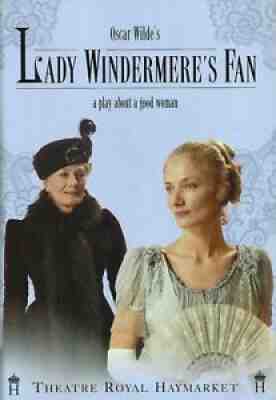
Sold on eBay Apr 01, 2022
Joely Richardson "LADY WINDERMERE'S FAN" Vanessa Redgrave 2002 London Playbill
(The revival opened February 22nd, 2002 and ran for fifteen weeks, closing June 8th, 2002.).
Sold on eBay August 24th, 2024
Anthony Rapp (Only Signed Playbill You're a Good Man, Charlie Brown BD Wong 1999
Anthony Rapp Signed Playbill from You're a Good Man, Charlie Brown At the Ambassador Theatre starring Anthony Rapp Kristin Chenoweth BD Wong Roger Bart Music and Lyrics by Clark Gesner ** This Playbill was Signed by Anthony Rapp after a Show in New York. The Signature by Anthony Rapp is on the front cover. Anthony Rappsigned in Black Thick Marker. . This is a Anthony Rapp Signed Playbill from You're a Good Man, Charlie Brown At the Ambassador Theatre. The stars of this new production of the musical are Anthony Rapp BD Wong , Roger Bart, and Kristin Chenoweth . There are Headshots and Biographies of the cast members. The Playbill is in Very Good Condition. The Playbill is dated from May 1999. Directed by Michael Mayer and Choreographed by Jerry Mitchell. Anthony Rapp (Only Signed Playbill You're a Good Man, Charlie Brown BD Wong 1999 Anthony Rapp (Only Signed Playbill You're a Good Man, Charlie Brown BD Wong 1999 Click images to enlarge Description ** Anthony Rapp Signed Playbill from You're a Good Man, Charlie Brown At the Ambassador Theatre starring Anthony Rapp Kristin Chenoweth BD Wong Roger Bart Music and Lyrics by Clark Gesner ** This Playbill was Signed by Anthony Rapp after a Show in New York. The Signature by Anthony Rapp is on the front cover. Anthony Rappsigned in Black Thick Marker. . This is a Anthony Rapp Signed Playbill from You're a Good Man, Charlie Brown At the Ambassador Theatre. The stars of this new production of the musical are Anthony Rapp BD Wong , Roger Bart, and Kristin Chenoweth . There are Headshots and Biographies of the cast members. The Playbill is in Very Good Condition. The Playbill is dated from May 1999. Directed by Michael Mayer and Choreographed by Jerry Mitchell. The Cast include Roger Bart Kristin Chenoweth Ilana Levine Stanley Wayne Mathis Anthony Rapp BD Wong Standby: Doan MacKenzie , Mark Price , and Kirsten Wyatt Other articles in this Playbill feature : Restaurant recommendations by Broadway Stars. A Dinning and Entertainment Guide. Theater listings of On and Off Broadway I have thousands of Playbills please email me with any requests.** Please vist Scarlett’s Shop for More Playbills & Collectibles A theatergoer’s Notebook with an article on Kristin Chenoweth as Sally from You’re A Good Man Charlie Brown & Andrea McArdle as Belle In Beauty and The Beast. An article on DAME JUDI DENCH her self on her return to Broadway Sian Phillips on recreating Marlene Dietrich for the Broadway Show Marlene. A Theatre Quiz on Tony Talent with Small Pictures of Kevin Spacey Matthew Broderick among others. The Wier by Conor McPhersonDavid Hare three Plays running at the same time on Broadway. The Blue Room , Amy’s View, and Via Dolorosa. On the Aisle with small pictures of Natasha Richardson , Vanessa Redgrave & David Hare Terms of Sale If making returns please email me first. It would be a big help if items are returned 30 day once they are received by you. Contact Us You can email me through ebay. Most emails are returned in 24 hours. Get images thatmake Supersized seem small.Showcase your items with Auctiva sListing Templates!THE simple solution for eBay sellers. Track Page Views WithAuctiva's Counter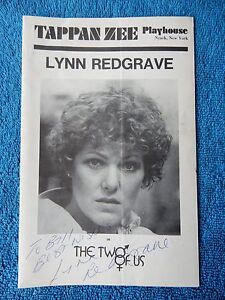
Sold on eBay October 13th, 2023
The Two Of Us - Tappan Zee Playhouse Theatre Playbill w/Autograph 1975
eBay The Two Of Us1975 - The Tappan Zee Playhouse Theatre - Playbill with Autograph (Lynn Redgrave, John Tillinger, David Leary and Carlos by: John ClarkThis is for the above mentioned Playbill. All playbills come in various conditions and state of "wear." Some are mint, near-mint and some may be older with creases, little fold and/or tears and/or discoloring from age. I tried to put as many pictures as possible so you can determine the condition. Please view the photos. If you have any questions or concerns please email me with your questions or comments. My goal is for a smooth transaction and your complete satisfaction! As with all items I sell, it is guaranteed to be authentic and comes with a 100% satisfaction guarantee. This is a great item for the celebrity, actor, actress, theater or Playbill fan or collector. Would also make a great gift!I am not a professional grader please check the photographs of the playbill to determine condition. All item descriptions are done in good faith and honesty and should be accurate. Should you have any questions please ask before bidding/buying. Thank you.Free shipping within the United States (all 50 States). I also ship internationally (International bidders/winners please contact me for shipping prices and options). (Canada residents this is a first class international package).Please pay for item in a reasonable time frame. If you are away or have some other issue about paying for item, please contact me. Thanks. Alex. eBay monitors those who do not pay in a timely manner.Check out the other items I have available in my store!Happy hunting!100% SATISFACTION GUARANTEED!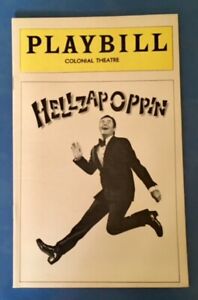
Sold on eBay October 12th, 2023
Vintage HELLZAPOPPIN Playbill Jerry Lewis Lynn Redgrave Flop 1976
eBay Vintage HELLZAPOPPIN Playbill Jerry Lewis Lynn Redgrave Flop 1976Hard to find! In very good condition.If you'd like additional photos or other information, please don't hesitate to ask.Please make your payment within 4 days after the auction ends. If for some reason payment can't be made within that time frame, please contact me so we can make other arrangements.)I always dispatch within 24 hours of receipt of payment (excluding weekends and holidays.)** Please remember to leave Feedback. I will gladly reciprocate. :-)
Sold on eBay March 20th, 2025
Tennessee Williams "ORPHEUS DESCENDING" Vanessa Redgrave 1988 London Playbill
This is a rare programme (playbill) from the West End revival of the TENNESSEE WILLIAMS play "ORPHEUS DESCENDING" at the Theatre Royal Haymarket in London. (The production opened December 13th, 1988 and ran for just over two months, closing February 18th, 1989.) ..... The play starred VANESSA REDGRAVE, JULIE COVINGTON, JEAN-MARC BARR and PAUL FREEMAN and featured MIRIAM MARGOLYES, CAROL MACREADY, MARY MACLEOD, MANNING REDWOOD, CAROL GILLIES, MARGERY MASON, AMANDA WALKER, RICHARD VANSTONE, JON RUMNEY, MITCH WEBB and DOYLE RICHMOND ..... CREDITS: Book by TENNESSEE WILLIAMS ("The Glass Menagerie", "A Streetcar Named Desire", "The Rose Tattoo", "Summer and Smoke", "Cat on a Hot Tin Roof", "Camino Real", "The Night of the Iguana"); Sets designed by ALISON CHITTY; Directed by PETER HALL; Produced by DUNCAN C. WELDON and JEROME MINSKOFF ..... DETAILS: The 36 page playbill measures 6 3/4" X 9 5/8" inches and includes full production credits, cast list, synopsis of scenes, program notes, extensive historical text, bios of each of the actors and members of the creative team as well as a number of production photos ..... CONDITION: With the exception of a few scratches on the front cover and moderate edge wear, this rare playbill is in excellent condition and will make a wonderful addition to the collection of any theatre aficionado or historian. This item will be carefully packaged in a protective, carded sleeve and backed by stiff cardboard.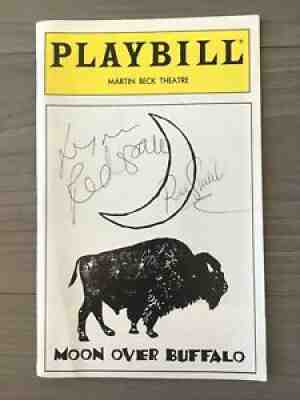
Sold on eBay Jan 07, 2022
Lynn Redgrave Robert Goulet Signed Moon Over Buffalo Playbill Theatre Broadway
Playbill from Moon Over Buffalo signed by both Lynn Redgrave and Robert Goulet! My ticket from March 21, 1996 at theMartin Beck Theatre!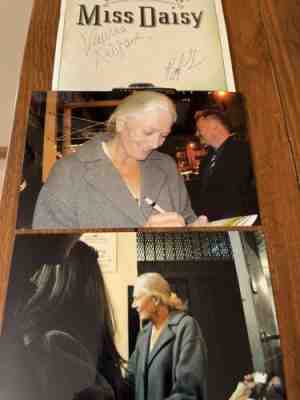
Sold on eBay Aug 27, 2022
DRIVING MISS DAISY Oct 2010 Broadway Playbill SIGNED VANESSA REDGRAVE
DRIVING MISS DAISY Oct 2010 Broadway Playbill SIGNED VANESSA REDGRAVE. Signed on front cover by Vanessa Redgrave & Boyd GainesAm including 13 snapshots of the actors ?¦some duplicates Very good condition from non-smoking home!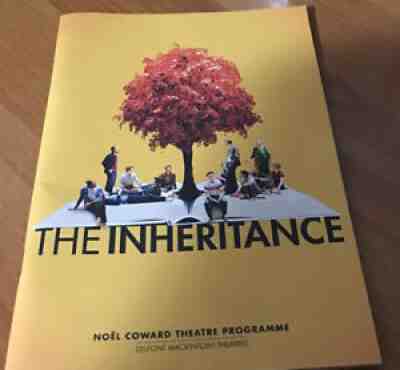
Sold on eBay Oct 12, 2021
The Inheritance West End Program/ Playbill 2018 Vanessa Redgrave, Andrew Burnap
The Inheritance West End Program/ Playbill 2018 Vanessa Redgrave, Andrew Burnap. Great condition. Smoke free home.No rips or tears. Very minor crease near binding. Barely noticeable.Noel Coward Theatre Programme West End production 2018Full color with interviews and photos.Please see photos for details.Will ship securely.
Sold on eBay Aug, 12th 2020