

*FRANKENSTEIN: RARE 1929 COLIN CLIVE JAMES WHALE JOURNEY'S END THEATRE PROGRAM*
*FRANKENSTEIN: RARE 1929 COLIN CLIVE JAMES WHALE JOURNEY'S END THEATRE PROGRAM*
SOLD $49.99 Sold: Jul 7, 2024 on eBayOriginal Listing Description
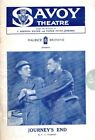
A rare original 1929 illustrated program for future Frankenstein and Bride of Frankenstein film star Colin Clive in Journey's End at the Savoy Theatre London. The play was directed by James Whale and also featured future horror film star George Zucco. Twenty eight pages, with photos of Clive and Zucco. Dimensions eight and a half by five and a half inches. Light wear otherwise good. Shipping discounts for multiple purchases. Inquiries always welcome. Please visit my other eBay items for more early theatre, classical music, film and historical autographs, photographs and programs and great actor and actress cabinet photos and CDV's. From Wikipedia:Colin Glenn Clive (born Clive-Greig; 20 January 1900 – 25 June 1937) was a British stage and screen actor. His most memorable role was Henry Frankenstein, the creator of the monster, in the 1931 film Frankenstein and its 1935 sequel, Bride of Frankenstein Early lifeClive was born in Saint-Malo, France, to an English colonel, Colin Philip Greig, and his wife, Caroline Margaret Lugard Clive. He attended Stonyhurst College and subsequently Royal Military Academy Sandhurst, where an injured knee disqualified him from military service and contributed to his becoming a stage actor.[1] He was a member of the Hull Repertory Theatre Company for three years.[1]Clive created the role of Steve Baker, the white husband of racially mixed Julie LaVerne, in the first London production of Show Boat; the production featured Cedric Hardwicke and Paul Robeson. Clive first worked with James Whale in the Savoy Theatre production of Journey's End and subsequently joined the British community in Hollywood, repeating his stage role in the film version [2][3]HollywoodClive s first screen role, in Journey's End (1930), was also directed by James Whale. Clive played the tormented alcoholic Captain Stanhope, a character that (much like Clive's other roles) mirrored his personal life. He was an in-demand leading man for several major film actresses of the era, including Katharine Hepburn, Bette Davis, Corinne Griffith, and Jean Arthur. He starred as Edward Rochester in the 1934 adaptation of Jane Eyre opposite Virginia Bruce. He was a descendant of Robert Clive and appeared in a featured role in Clive of India (1935), a biopic of his ancestor [4][2]Colin Clive, together with Leo G. Carroll, starred in a radio play titled The Other Place. It was written by John L. Balderston for the radio program The Fleischmann's Yeast Hour hosted by Rudy Vallee. It was aired on 14 November 1935 [5]Personal lifeClive was married to Jeanne de Casalis[6] in June 1929, though they were estranged for several years before his death DeathColin Clive suffered from severe chronic alcoholism and died from complications of tuberculosis in 1937 at age 37.[4]Clive's alcoholism was apparent to his co-stars, as he was often seen napping on set and sometimes was so intoxicated that he had to be held upright for over the shoulder shots. Clive was tormented by the medical threat of amputation of his long-damaged leg.[7]Forrest J Ackerman recalled visiting Clive's body: "I actually saw him in death, lying in a bed at a mortuary where it was possible for the public to view his body. He looked remarkably as he had when lying in bed in The Bride of Frankenstein [8] Over 300 mourners turned out. One of the pallbearers was Peter Lorre Frankenstein is a 1931 American pre-Code science fiction horror film directed by James Whale, produced by Carl Laemmle Jr., and adapted from a 1927 play by Peggy Webling, which in turn was based on Mary Shelley's 1818 novel Frankenstein; or, The Modern Prometheus. The Webling play was adapted by John L. Balderston and the screenplay written by Francis Edward Faragoh and Garrett Fort, with uncredited contributions from Robert Florey and John Russell Frankenstein stars Colin Clive as Henry Frankenstein (Victor Frankenstein in the novel), an obsessed scientist who digs up corpses with his assistant in order to assemble a living being from body parts. The resulting creature, often known as Frankenstein's monster, is portrayed by Boris Karloff. The makeup for the monster was provided by Jack Pierce. Alongside Clive and Karloff, the film's cast also includes Mae Clarke, John Boles, Dwight Frye, and Edward Van Sloan.Produced and distributed by Universal Pictures, the film was a commercial success upon release, and was generally well received by both critics and audiences. It spawned a number of sequels and spin-offs, and has had a significant impact on popular culture: the imagery of a maniacal "mad" scientist with a subservient hunchbacked assistant and the film's depiction of Frankenstein's monster have since become iconic. In 1991, the United States Library of Congress selected Frankenstein for preservation in the National Film Registry as being "culturally, historically, or aesthetically significant".
Note: This item has been sold and is no longer available. This page serves as a historical price reference for Playbill collectors and appraisers.
Original Listing Description
A rare original 1929 illustrated program for future Frankenstein and Bride of Frankenstein film star Colin Clive in Journey's End at the Savoy Theatre London. The play was directed by James Whale and also featured future horror film star George Zucco. Twenty eight pages, with photos of Clive and Zucco. Dimensions eight and a half by five and a half inches. Light wear otherwise good. Shipping discounts for multiple purchases. Inquiries always welcome. Please visit my other eBay items for more early theatre, classical music, film and historical autographs, photographs and programs and great actor and actress cabinet photos and CDV's. From Wikipedia:Colin Glenn Clive (born Clive-Greig; 20 January 1900 – 25 June 1937) was a British stage and screen actor. His most memorable role was Henry Frankenstein, the creator of the monster, in the 1931 film Frankenstein and its 1935 sequel, Bride of Frankenstein Early lifeClive was born in Saint-Malo, France, to an English colonel, Colin Philip Greig, and his wife, Caroline Margaret Lugard Clive. He attended Stonyhurst College and subsequently Royal Military Academy Sandhurst, where an injured knee disqualified him from military service and contributed to his becoming a stage actor.[1] He was a member of the Hull Repertory Theatre Company for three years.[1]Clive created the role of Steve Baker, the white husband of racially mixed Julie LaVerne, in the first London production of Show Boat; the production featured Cedric Hardwicke and Paul Robeson. Clive first worked with James Whale in the Savoy Theatre production of Journey's End and subsequently joined the British community in Hollywood, repeating his stage role in the film version [2][3]HollywoodClive s first screen role, in Journey's End (1930), was also directed by James Whale. Clive played the tormented alcoholic Captain Stanhope, a character that (much like Clive's other roles) mirrored his personal life. He was an in-demand leading man for several major film actresses of the era, including Katharine Hepburn, Bette Davis, Corinne Griffith, and Jean Arthur. He starred as Edward Rochester in the 1934 adaptation of Jane Eyre opposite Virginia Bruce. He was a descendant of Robert Clive and appeared in a featured role in Clive of India (1935), a biopic of his ancestor [4][2]Colin Clive, together with Leo G. Carroll, starred in a radio play titled The Other Place. It was written by John L. Balderston for the radio program The Fleischmann's Yeast Hour hosted by Rudy Vallee. It was aired on 14 November 1935 [5]Personal lifeClive was married to Jeanne de Casalis[6] in June 1929, though they were estranged for several years before his death DeathColin Clive suffered from severe chronic alcoholism and died from complications of tuberculosis in 1937 at age 37.[4]Clive's alcoholism was apparent to his co-stars, as he was often seen napping on set and sometimes was so intoxicated that he had to be held upright for over the shoulder shots. Clive was tormented by the medical threat of amputation of his long-damaged leg.[7]Forrest J Ackerman recalled visiting Clive's body: "I actually saw him in death, lying in a bed at a mortuary where it was possible for the public to view his body. He looked remarkably as he had when lying in bed in The Bride of Frankenstein [8] Over 300 mourners turned out. One of the pallbearers was Peter Lorre Frankenstein is a 1931 American pre-Code science fiction horror film directed by James Whale, produced by Carl Laemmle Jr., and adapted from a 1927 play by Peggy Webling, which in turn was based on Mary Shelley's 1818 novel Frankenstein; or, The Modern Prometheus. The Webling play was adapted by John L. Balderston and the screenplay written by Francis Edward Faragoh and Garrett Fort, with uncredited contributions from Robert Florey and John Russell Frankenstein stars Colin Clive as Henry Frankenstein (Victor Frankenstein in the novel), an obsessed scientist who digs up corpses with his assistant in order to assemble a living being from body parts. The resulting creature, often known as Frankenstein's monster, is portrayed by Boris Karloff. The makeup for the monster was provided by Jack Pierce. Alongside Clive and Karloff, the film's cast also includes Mae Clarke, John Boles, Dwight Frye, and Edward Van Sloan.Produced and distributed by Universal Pictures, the film was a commercial success upon release, and was generally well received by both critics and audiences. It spawned a number of sequels and spin-offs, and has had a significant impact on popular culture: the imagery of a maniacal "mad" scientist with a subservient hunchbacked assistant and the film's depiction of Frankenstein's monster have since become iconic. In 1991, the United States Library of Congress selected Frankenstein for preservation in the National Film Registry as being "culturally, historically, or aesthetically significant".
Note: This item has been sold and is no longer available. This page serves as a historical price reference for Playbill collectors and appraisers.