

Playbill Collectibles : Playbill+life Price List
average value
-
low
-high
-Found 20 out of 56,978 items matching 'life'
Sold on eBay November 3rd, 2024
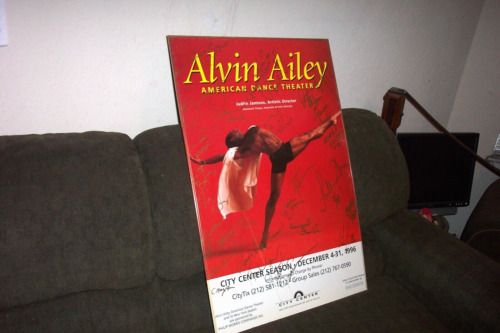
ALVIN AILEY AMERICAN DANCE THEATER POSTER Signed by Judith Jamison & 24 Others!
ALVIN AILEY AMERICAN DANCE THEATER POSTER Signed by Judith Jamison & 24 Others! This New York City Center Season Poster marked the end of the dances, and production team's Dec.1996 season performances and was signed: Thank You, Judith Jamison. Notable signatures by Zorba Soteras, Don Bellamy, Lisa Johnson, Toni Pierce, Rene Robinson, Matthew Rushing and many others.The Alvin Ailey American Dance Theater presented some of its repertory classics on Saturday night at City Center.The evening began with Alvin Ailey's gritty ''Blues Suite,'' a piece in which the recorded accompaniment combines songs by Brother John Sellers with the tolling of bells and the melancholy sound of a locomotive whistle. In the world of this dance, it is always late at night on the wrong side of the tracks.The cast danced the night away with an effective combination of melancholy, stoicism and anger. Toni Pierce, Danielle Gee and Desiree Vlad convincingly suggested that they were doomed to a life in a New Orleans brothel. And in dance-hall scenes Dudley Williams portrayed an eager blunderer and Renee Robinson and Michael Joy were two strong-minded people who were willing to be partners, yet neither would put up with any nonsense from the other.Donald McKayle's ''Rainbow 'Round My Shoulder,'' a work from 1959 about prisoners on a chain gang, received a welcome revival. The choreography is remarkable for the way it makes intricate contrapuntal movements seem not only fascinating patterns in space, but also signs of the prisoners' weariness, doggedness and desperation. The cast brought the choreography to a feverish climax in which Matthew Rushing and Don Bellamy were prisoners who attempted to escape their confinement. As a symbolic personification of all the women the prisoners dreamed of, Elizabeth Roxas was at various times saucy, lyrical and maternal.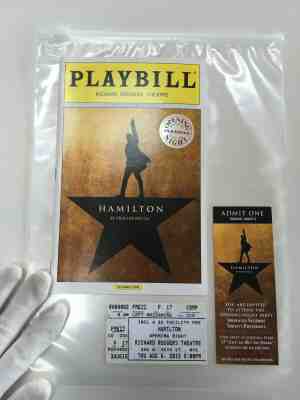
Sold on eBay Jul, 13th 2020
RARE Hamilton Broadway Opening Night Program, Ticket Stub + Party Pass
This is an extremely rare set from the Broadway opening night of HAMILTON: An American Musical. It includes the opening night Playbill (with silver 'opening night' seal), a ticket stub, and a pass for the after-party.<br />At Broadway openings, party passes are uniquely numbered so they can not be copied, and must be surrendered at the door to gain admission to the party. Due to an early morning flight the next day, I was unable to attend the party, which is why I still have this party pass.<br />This is a great gift for the #Hamilfan in your life, and a great way for me to pay my bills AND do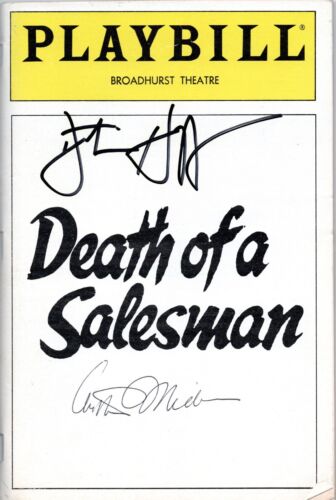
Sold on eBay September 21st, 2024
PLAYBILL for DEATH OF A SALESMAN Signed by Arthur Miller and Dustin Hoffman 1984
This copy of the Broadhurst Theatre PLAYBILL for DEATH OF A SALESMAN, Signed by Arthur Miller and Dustin Hoffman was published by Playbill Incorporated in 1984 to accompany that year’s production of the critically acclaimed play starring Dustin Hoffman as the salesman, Willie Loman. The signatures of both Arthur Miller, the play’s playwright, and Dustin Hoffman appear on the front cover of the Playbill. The Playbill magazine, which measures approximately 5 ½ inches wide by 8 ½ inches tall, contains 134 pages of text, illustrations and advertisements related to the play, the theater world, and the New York environment in which theaters are prominent. The magazine is staple bound in stiff paper covers. The two signatures, on the front cover, are clean and unblemished. The magazine is complete and in fine condition. The illustrations accompanying this description show the front cover of the Playbill, the “Title Page” for the play, a 2-page spread showing the cast and some of Arthur Miller’s “own words about life and art”, and a page of “Scenes from Death of a Salesman”. Arthur Asher Miller (October 17, 1915 – February 10, 2005) was an American playwright, essayist and screenwriter in the 20th-century American theater. Among his most popular plays are All My Sons (1947),Death of a Salesman (1949), The Crucible (1953), and A View from the Bridge (1955). He wrote several screenplays, including The Misfits (1961). The drama Death of a Salesman is considered one of the best American plays of the 20th century. [Wikipedia] Dustin Lee Hoffman (born August 8, 1937) is an American actor. As one of the key actors in the formation of New Hollywood, Hoffman is known for his versatile portrayals of antiheroes and emotionally vulnerable characters. He is the recipient of numerous accolades, including two Academy Awards, four BAFTA Awards, five Golden Globe Awards, and two Primetime Emmy Awards. Hoffman has received numerous honors, including the Cecil B. DeMille Award in 1997, the AFI Life Achievement Award in 1999, and the Kennedy Center Honors Award in 2012. Actor Robert De Niro has described him as "an actor with the everyman's face who embodied the heartbreakingly human". [Wikipedia]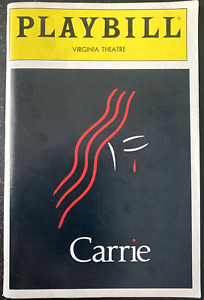
Sold on eBay October 20th, 2023
Carrie Opening Night Broadway Playbill & Rare Priceless Bonus 1988
eBay Carrie Opening Night Broadway Playbill May 12, 1988 plus Priceless BonusRemastered soundboard recording of Carrie the Musical from the final performance on Broadway on May 15, 1988. From Wikipedia, the free encyclopedia Carrie is a musical with a book by Lawrence D. Cohen, lyrics by Dean Pitchford, and music by Michael Gore. Adapted from Stephen King's 1974 horror novel Carrie, it focuses on an awkward teenage girl with telekinetic powers whose lonely life is dominated by an oppressive religious fanatic mother. When she is humiliated by her classmates at the high school prom, she unleashes chaos on everyone and everything in her path out of vengeance. Originally premiering in the U.K. in 1988, Carrie opened on Broadway at the Virginia Theatre the same year, but closed after 16 previews and five regular performances. Due to the passionate response from both its critics and its fans, the show is considered one of the most notable failures in Broadway theatre history; a 1991 book written by Ken Mandelbaum, which chronicled the history of flop Broadway musicals, was partially entitled Not Since Carrie, and a 2021 podcast and subsequent 2023 book, Out for Blood, documented its creation and development.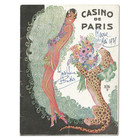
Sold on eBay March 16th, 2025
Josephine Baker Signed Casino De Paris 1931 Program by Zig Louis Gaudin Original
Josephine Baker Signed Casino De Paris 1931 Program by Zig (Louis Gaudin)The Casino de Paris, where in 1930 Josephine debuted what was perhaps her most successful show to date, entitled “Paris qui Remue” (Paris that Stirs). It featured a live cheetah named Chiquita and saw Baker debut her hit song “J’ai deux amours”.The stage was appropriately set for what was arguably the most important performance run of her career – Paris Qui Remue at the Casino de Paris. The show opened on September 26, 1930. Baker performed what would become her signature song, “J’ai Deux Amours,” for the first time. And she became irrevocably identified as an animal lover when made a house pet of a stage prop, Chiquita the cheetah.The vintage poster was created in 1930 by Zig (Louis Gaudin). The lithograph was recreated using the same hand pulled process on a vintage press in 1999.Signing his work as “Zig,” Louis Gaudin is best known for his posters for night life. He began his career in the United States, designing the costumes for Broadway musicals, he later was a frequent client of Parisian fashion boutiques. During the period 1926-1932, Zig created many posters and journal covers featuring Josephine Baker and Mistinguett for the Casino de Paris.Printer: Central Publicite, ParisVery good condition. Crease in center as shown in pics.SKU 5080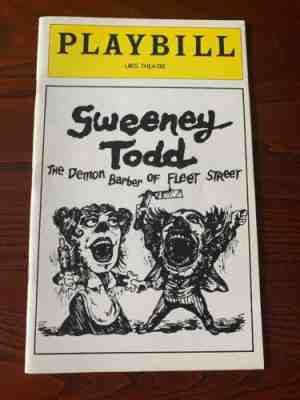
Sold on eBay Feb, 2nd 2020
Opening Night Cast Signed Sweeney Todd Playbill
EXTREMELY RARE Opening Night Signed Sweeney Todd Playbill. Signed by everyone in the cast including Director Hal Prince and Composer Stephen Sondheim. One in a life time playbill. Kept in a frame and a smoke free home.
Sold on eBay May 9th, 2024
Magician HARRY HOUDINI in Providence, Rhode Island 1907 Vaudeville Program
This is a rare February 4th, 1907 program (playbill) from the Vaudeville bill at the historic B. F. Keith's Theatre in Providence, Rhode Island ..... On the current bill was the World Famous HARRY HOUDINI in his second week at Keith's Theatre, presenting a series of amazing feats: the Needle Trick; Blackwell's Island Straightjacket; Paper Bag made by Jencks Bros. Box Company; Packing Case built on the stage by O'Gorman Company; Basket Challenge; Rope Challenge (in full view of audience) and Paper Box made by R. L. Rose Company ..... Others on the bill included CHARLOTTE PARRY and her Company in "The Comstock Mystery"; Capt. GEORGE AUGER and Company present "Jack the Giant Killer"; Mlle. LOUISE RAFFIN's Troupe of Trained Monkeys; The NICHOLS' SISTERS in their Character Studies "Kentucky Belles"; GEORGE H. WOOD "The Somewhat Different Comedian"; WILLIAM A. INMAN and Company in Mr. Inman's Bit of Everyday Life "Recognition"; AURIE DAGWELL "The Girl who Sings the Old Songs"; The PELOTS presenting "Fun in the Hotel Office"; The BLANCHARDS "Musical Entertainers"; HENRY POTTER and MAY HARRIS "Gymnasts" and BISSET and MILLER "Dancers" ..... DETAILS: The 24 page playbill measures 5 3/4" X 9 1/2" inches and includes the list of entertainers with performance credits and wonderful vintage advertising, but no cast photos or bios ..... CONDITION: (Please Note!) Advertisements were clipped from three different pages (all pages shown), there are two tears in the outside edge of the inside pages, rusted staples, a vertical fold, light soiling and minor edge wear. Despite these flaws, this rare program will make a wonderful addition to the collection of any theatre aficionado or historian. This item will be carefully packaged in a protective, carded sleeve and backed by stiff cardboard.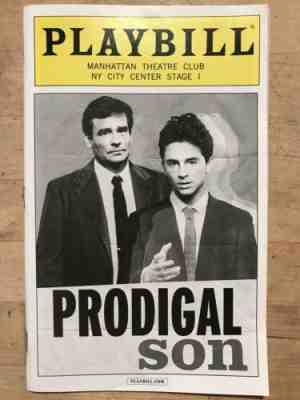
Sold on eBay Jun, 22nd 2020
PRODIGAL SON Jan 2016 City Center Playbill TIMOTHEE CHALAMET Robert Sean Leonard
Parting with my collection is helping me stay afloat during the Broadway shutdown. A portion always goes to charity directly through eBay, and as much as I am able, I am making additional donations to civil rights, arts education, and health care initiatives.I am hopeful that this item will find a new forever home where it can fill your life with joy!All of my items come from a smoke free home and a portion always goes to charity.I have thousands of Playbills. If there is something you’d like to see me list, please feel free to message me!Please bid carefully; I can not cancel bids after the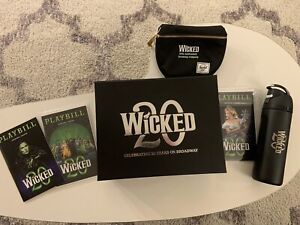
Sold on eBay December 8th, 2023
Exclusive Wicked Broadway 20th Anniversary Playbills and Company Memorabilia
eBay Immerse yourself in the magical world of Wicked with these exclusive playbills and company memorabilia celebrating its 20th anniversary on Broadway. Perfect for any theater enthusiast, these treasures will transport you to the land of Oz and beyond. Please note the fanny pack (hip bag) and water bottle are exclusive items that were only made for the creative team of the show — these items are/were not available for sale to the public!Whether you frame them for display or add them to your collection, these items are a must-have for any fan of the hit musical. Featuring stunning artwork and behind the scenes glimpses, these playbills and memorabilia showcase the incredible talent and dedication that goes into bringing Wicked to life. From the iconic songs to the lavish costumes, every aspect of the production is captured in these pieces. Don't miss your chance to own a piece of Broadway history with these exclusive Wicked 20th anniversary items.
Sold on eBay January 13th, 2024
Huge lot of 390 BROADWAY PLAYBILLS 1930's to 1950's only - ALL UNIQUE PLAYBILLS
eBay You're looking a HUGE lot of 390 of random BROADWAY PLAYBILLS from the1930's - 1950's only. All the playbills are unique for the theatre and years of issue. In other words, there are no exact duplicates, but plays from the same theater for a different date with different cover and contents. These programs are used, but in good vintage condition overall. Some of the programs are in better condition than others (none of them is complete beat up). The programs have imperfections such as: corner dings, creases, fold marks, writing (like a date on the show), sticker on cover page (with date), staple marks (from ticket stub), clear tape on corner of cover page, very small insignificant tears, minor cover page/spine wear, discoloration or staining due to age, and other similar imperfections. See pictures. Other minor flaws may be present. What you see is what you get. A few of these programs may come with original inserts. To be sold as a lot only. Great starter collection or opportunity to add to your playbill collection Please note: I threw in some extra free (unique) playbills with condition issues (like loose cover page, more staining, etc.) to bump the actual number of playbills to well over 400.Here's a link to my UPS, USPS or FedEx Ground shipping within Continental US. Priority Mail international shipping is $250.Please ask any questions before making a purchase. Thanks and good luck! Complete list of programs in alphabetical order:1.) A View From The Bridge (Coronet, 1955)2.) Accent On Youth (Plymouth, 1935)3.) Affairs Of State (Music Box, 1951)4.) All For Love (Mark Hellinger, 1949)5.) All My Songs (Coronet, 1947)6.) Allegro (Majestic, 1947)7.) Almanac (Imperial, 1953)8.) American Repertory Theatre (International, 1946)9.) American Way, The (Center, 1939)10.)An Evening With Beatrice Lillie (Booth, 1952)11.)An Inspector Calls (Booth, 1947)12 )Anastasia (Lyceum, 1955)13.)Angel In The Wings (Coronet, 1948)14.)Angel In The Wings (Coronet, 1947)15.)Anna Lucasta (Mansfield, 1945)16.)Anna Lucasta (Mansfield, 1945) different cover date17 )Anne Of The Thousand Days (Sam S. Shubert, 1949)18.)Angel Street (John Golden, 1942)19 )Another Part Of The Forest (Fulton, 1946)20 )Another Part Of The Forest (Fulton, 1947)21 )Another Love Story (Fulton, 1943)22 )Antigone (Cort, 1946)23 )Anything Goes (Alvin, 1935)24.)Apple Cart, The (Plymouth, 1956)25.)Around The World In 80 Days (Rivoli, 1956)26 )Arsenic And Old Lace (Fulton, 1943)27 )Arsenic And Old Lace (Fulton, 1941)28.)Arms And The Girl (Forth-Sixth Street, 1950)29.)Army Play By Play, The (Martin Beck, 1943)30.)Awake And Sing (Windsor, 1939)31 )Bachelor Born (Morosco, 1938)32.)Bad Seed, The (Forty-Sixth Street, 1955)33 )Ballett Russe (Majestic, 1935)34 )Barefoot Boy With Cheek (Martin Beck, 1947)35 )Barretts Of Winpole Street, The (Ethel Barrymore, 1945)36 )Beautiful People, The (Lyceum, 1941)37 )Beggar s Holiday (Broadway, 1947)38.)Bells Are Ringing (Sam S. Shubert, 1957)39.)Bell, Book And Candle (Ethel Barrymore, 1951)40.)Best Foot Forward (Ethel Barrymore, 1941)41 )Billion Dollar Baby (Alvin, 1946)42.)Bless You All (Mark Hellinger, 1951)43.)Blithe Spirit (Booth, 1943)44 )Bloomer Girl (Sam S. Shubert, 1945)45 )Blossom Time (Forty-Sixth Street, 1938)46.)Blow Ye Winds (Forty-Sixth Street, 1937)47.)Born Yesterday (Lyceum, 1946)48 )Borscht Capades (Royale, 1951)49.)Boy Meets Girl (Cort, 1936)50.)Boy Friend, The (Royale, 1955)51 )Burgess Meredith (Booth, 1946)52 )Burlesque (Belasco, 1947)53.)By Jupiter (Sam S. Shubert, 1943)54.)By The Beautiful Sea (Imperial, 1954)55.)Caesar And Cleopatra (National, 1950)56.)Caesar And Cleopatra (National, 1950) different cover date57 )Caine Mutiny Court Martial, The (Plymouth, 1954)58.)Call Me Madam (Imperial, 1951)59 )Can Can (Sam S. Shubert, 1955)60.)Carmen Jones (Broadway, 1944)61 )Carousel (Majestic, 1945)62.)Child Of Fortune (Royale, 1956)63 )Children s Hour, The (Coronet, 1953)64 )Children s Hour, The (Maxine Elliott's, 1936)65.)Clash By Night (Belasco, 1941)66 )Claudia (Booth, 1941)67 )Clutterbuck (Biltmore, 1950)68 )Cocktail Party, The (Henry Miller s 1950)69 )Come Back, Little Sheba (Booth, 1950)70.)Come In Music (John Golden, 1954)71 )Compulsion (Ambassador, 19 )72 )Compulsion (Ambassador, 19??) different cover date73 )Common Ground (Fulton, 1945)74 )Confidential Clerk, The (Morosco, 1954)75 )Constant Wife, The (National, 1952)76 )Consul The (Ethel Barrymore, 1950)77.)Cradle Will Rock, The (Mansfield, 1948)78 )Craig s Wife (Playhouse, 1947)79.)Cranks (Bijou, 1956)80.)Cream In The Well, The (Booth, 1941)81 )Crucible The (Martin Beck, 1953)82.)Cup Of Trembling, The (Music Box, 1948)83.)D'Oyly Carte Opera Company (Martin Beck, 1939)84.)Damn Yankees (Forty-Sixth Street, 1956)85.)Damn Yankees (Forth-Sixth Street, 1956) different cover date86 )Dance Me A Song (Royale, 1950)87.)Daphne Laureola (Music Box, 1950)88.)Dark Eyes (Belasco, 1943)89.)Dark Is Light Enough, The (Anta, 1955)90.)Dark Victory (Plymouth, 1934)91.)Dead End (Belasco, 1936)92.)Dear Charles (Morosco, 1954)93.)Dear Ruth (Henry Miller's, 1944)94.)Death Of A Salesman (Morosco, 1949)95.)Deep Are The Roots (Fulton, 1946)96.)The Deep Blue Sea (Morosco, 1952)97.)Desk Set, The (Broadhurst, 1955)98 )Desperate Hours, The (Ethel Barrymore, 1955)99 )Detective Story (Hudson, 1949)100 )Devil s Disciple, The (Royale, 1950)101.)Dial 'M' For Murder (Plymouth, 1953)102.)Diary Of Anne Frank, The (Cort, 1956)103.)Diary Of Anne Frank, The (Cort, 1955)104.)Diary Of Anne Frank, The (Ambassador, 1957)105 )Distaff Side, The (Booth, 1934)106 )Dodsworth (Sam S. Shubert, 1934)107 )Doll s House, A (Broadhurst, 1938)108 )Doughgirls The (Lyceum, 1943)109.)Dream Child (Vanderbilt, 1934)110.)Du Barry Was A Lady (Forty-Sixth Street, 1940)111.)Earl Carroll Vanities (St. James, 1940)112.)Earl Carroll Sketch Book (Winter Garden, 1935)113 )Edward My Son (Martin Beck, 1948)114.)End As A Man (Vanderbilt, 1953)115 )Ernest Pascal's Peepshow (Fulton, 1944) 116.)Ethel Barrymore In The Corn Is Green (Martin Beck, 1943)117 )Evening With Beatrice Lillie, An (Booth, 1952)118 )Fabulous Invalid, The (Broadhurst, 1938)119.)Fair Game (Longacre, 19 )120 )Fallen Angels (Playhouse, 1956)121.)Fanny (Majestic, 1955)122 )Father Malady's Miracle (St. James, 1938)123.)Farm Of Three Echoes (Cort, 1939)124.)Fifth Season, The (Cort, 1953)125 )Finian s Rainbow (Forty-Sixth Street, 1947)126.)First Lady (Music Box, 1936)127 )Flowering Peach, The (Belasco, 1955)128 )Foolish Notion (Martin Beck, 1945)129.)Four Winds (Cort)130 )Fourposters The (John Golden, 1953)131 )Fourposters The (Ethel Barrymore, 1951)132 )Gentle People, The (Belasco, 1939)133 )Gentlemen Prefer Blondes (Ziegfeld, 1951)134 )Gilbert And Sullivan Operas (New Century, 1948)135.)Girl In Pink Tights, The (Mark Hellinger, 1954)136.)Girl On The Via Flaminia, The (Forty-Sixth Street, 1954)137.)Girls Of Summer (Longacre 1956)138 )Gladys George (Henry Millers, 1935)139.)Glass Menagerie, The (Playhouse, 1945)140 )Golden Apple, The (Phoenix, 1954)141 )Golden Boy (Belasco, 1938)142.)Good Night Ladies (Royale, 1945)143 )Goodbye My Fancy (Morosco, 1948)144.)Green Pastures, The (Broadway, 1951)145.)Guys & Dolls A Musical Fable Of Broadway (Forty-Sixth Street, 1952)146 )Hallams The - Booth (Booth, 1948)147 )Happies Millionaire, The (Lyceum, 1957)148.)Happy Time, The (Plymouth, 1950)149 )Harriet (Henry Millers, 1944)150 )Harvey (Forty-Eigth Street, 1947)151 )Hatful Of Rain, A (Lyceum, 1956)152.)Helen Goes To Troy (Alvin, 1944)153.)Helen Hayes (Broadhurst, 1936)154.)Hellz Poppin (Winter Garden, 1939)155.)Henry IV (St. James, 1939)156 )Hidden River, The (Playhouse, 1957)157.)High Tor (Martin Beck, 1937)158.)Hold On To Your Hats (Sam S. Shubert, 1940)159 )Hooray For What (Winter Garden, 1938)160.)I Knock At The Door (Belasco, 19??)161.)I Know My Love (Sam S. Shubert, 1950)162.)I Remember Mama (Music Box, 1945)163.)I'd Rather Be Right (Alvin, 1938)164 )Idiot s Delight (Sam S. Shubert, 1936)165 )Inherit The Wind (National, 1957)166 )Importance Of Being Earnest, The (Royale, 1947)167 )Importance Of Being Earnest, The (Vanderbilt, 1939168 )Innocents The (Playhouse, 1950)169 )Jackpot (Alvin, 1944)170.)Janus (Plymouth, 1956)171.)Jason (Hudson, 1942)172.)Joan Of Lorraine (Alvin, 1947)173.)Joy To The World (Plymouth, 1948)174 )Jubilee (Imperial, 1935)175 )Junior Miss (Majestic, 1943)176 )Junior Miss (Lyceum, 1942)177.)Juno And The Paycock (Mansfield, 1935)178.)Kind Lady (Longacre, 1935)179.)King And I, The (St. James, 1952)180.)Kind Sir (Alvin, 1954)181.)King Of Hearts (Lyceum 1954)182 )King Richard III (St. James, 1937)183 )Kismet (Ziegfeld, 1954)184.)Kiss And Tell (Biltmore, 1944)185.)La Vida Es Sueno (Broadhurst, 1953)186.)Lady From The Sea, The (Fulton, 1950)187.)The Lady's Not For Burning (Royale, 1950)188.)Land Is Bright, The (Music Box 1941)189 )Lady In The Dark (Alvin, 1942)190.)Lark, The (Longacre, 1956)191.)Late George Apley, The (Lyceum, 1945)192.)Leave It To Me! (Mansfield, 1939)193.)Leave It To Me! (Imperial 1939)194 )Lend An Ear (National, 1948)195.)Let's Face It (Imperial, 1942)196.)Les Ballets De Paris (Winter Garden, 1949)197 )Liberty Jones (Sam S. Shubert, 1941)198.)Light Up The Sky (Royale, 1948)199 )Little Foxes, The (National, 1939)200.)Li'l Abner (St. James, 1956)201 )Little Blue Light, The (Anta Playhouse, 1951)202 )Living Room, The (Henry Miller's, 1954)203.)Look, Ma, I'm Dancin'! (Adelphi, 1948)204 )Louisiana Purchase (Imperial, 1941)205.)Love Of Four Colonels, The (Sam S. Shubert, 1953)206 )Lovers And Friends (Plymouth, 1944)207 )Lunatics And Lovers (Broadhurst, 1955)208.)Lute Song (Plymouth, 1945)209 )Madame Bovary (Broadhurst, 1937)210 )Mademoiselle Colombe (Longacre, 1954)211 )Madwoman Of Chaillot, The (Belasco, 1949)212.)Major Barbara (Morosco, 1957)213.)Make Mine Manhattan (Broadhurst, 1948)214.)Make Way For Lucia (Cort, 1949)215.)Male Animal, The (Cort, 1940)216.)Male Animal, The (Music Box, 1952)217.)Man And Superman (Alvin, 1948)218.)Man Who Came To Dinner, The (Music Box, 1940)219 )Marcel Marceau (Ethel Barrymore, 1955)220 )Margin For Error (Plymouth, 1948)221 )Marinka (Winter Garden, 1945)222.)Mary Rose (Anta Playhouse, 1951)223.)May Wine (St. James, 1936)224.)Me And Juliet (Majestic, 1953)225 )Member Of The Wedding, The (Empire, 1950)226 )Merrily We Roll Along (Music Box 1934)227 )Merry Widow, The (Majestic, 1944)228 )Mexican Hayride (Majestic, 1945)229 )Middle Of The Night (Anta, 1956)230 )Misalliance (Ethel Barrymore, 1953)231.)Miss Isabel (Royale, 19 )232 )Mister Roberts (Alvin, 1948)233.)Moon Is Blue. The (Henry Milller's, 1951)234 )Morning s At 7 (Longacre, 1939)235.)Most Happy Fella, The (Imperial, 1957)236.)Mr. And Mrs. North (Belasco, 1941)237.)Mr. Wonderful (Broadway, 1956)238.)Mr. Wonderful (Broadway. 1956) different cover date239 )My Fair Lady (Mark Hellinger, 1957)240.)My Name Is Aquilon (Lyceum, 1949(241.)My Sister Eileen (Biltmore, 1941)242.)My 3 Angels (Morosco, 1953)243 )Native Son (St. James, 1941)244.)New Faces Of 1952 (Royale, 1952)245.)New Girl In Town (Forty-Six Street, 1957)246.)New Pins And Needles (Windsor, 1940)247.)New York City Ballet, (New York City Ballet, 1958)248.)New York City Ballet Winter Season (New York City Ballet, 1958)249.)Night Of January 16 (Ambassador, 1935)250.)No Time For Comedy (Ethel Barrymore, 1939)251.)No Time For Sergeants (Alvin, 1956)252.)Now I Lady Me Down To Sleep (Broadhurst, 1950)253.)Nude With Violin (Belasco, 19??)254.)O Mistress Mine (Empire 1947)255 )Of Mice And Men (Music Box, 1937)256.)Oh, Men! Oh, Women! (Henry Miller's, 1954)257 )Oklahoma (St. James, 1947)258.)Old Acquaintance (Morosco, 1941)259.)On Borrowed Time (Longacre, 1938)260.)On The Town (Forty-Fourth Street, 1945) 261.)On Your Toes (Forth-Sixth Street, 1954)262.)On Whitman Avenue (Cort 1946)263 )Once Is Enough (Henry Miller's, 1938)264.)One Touch Of Venus (Forty-Sixth Street, 1944)265.)One Touch Of Venus (Forty-Sixth Street, 1944) different cover date266 )Our Town (Morosco, 1938)267.)Out Of This World (New Century, 1951)268 )Overtons The (Forrest, 1945)269.)Paint Your Wagon (Sam S. Shubert, 1952)270 )Pajama Game, The (St. James, 1955)271 )Parisienne (Fulton, 1950272 )Patriots The (National, 1943)273 )Personal Appearance (Henry Miller's, 1934)274 )Petrified Forest, The (Broadhurst, 1935)275 )Philadelphia Story, The (Sam S. Shubert, 1939)276 )Pirate The (Martin Beck, 1943)277 )Pirate The (Martin beck, 1942)278.)Plain And Fancy (Winter Garden, 1955)279.)Plain And Fancy (Winter Garden, 1955) different cover date280 )Play s The Thing, The (Booth, 1948)281 )Playboy Of The Western World, The (Booth, 1946)282 )Ponder Heart, The (Music Box, 1956)283.)Post Road (Masque, 1934)284 )Pre Honeyroom (Lyceum, 1936)285 )Present Laughter (Plymouth, 1946)286 )Pygmalion (Ethel Barrymore, 1946)287 )Ramshackle Inn (Royale, 1944)288.)Red Gloves (Mansfield, 1949)289.)Red Mill, The (Forth-Sixth Street, 1946)290 )Relapse The Or Virtue In Danger (Morosco, 1950)291 )Reluctant Debutante, The (Henry Miller s 1956)292 )Remarkable Mr. Pennypacker, The (Coronet, 1954)293 )Respectful Prostitute, The (Cort, 1948)294 )Righteous Are Bold, The (Holiday, 1956)295.)Ring Round The Moon (Martin Beck, 1950)296.)Romeo And Juliet (Fifty-First Street, 1940)297.)Romeo And Juliet (Martin Beck, 1935)298.)Room Service (Cort, 1937)299 )Roomful Of Roses, A (Playhouse, 1955)300 )Rosalinda (Forty-Fourth Street, 1943)301 )Rugged Path, The (Plymouth, 1945)302 )Rumple (Alvin, 19 )303 )Russet Mantle (Masque, 1936)304.)Ryan Girl, The (Plymouth, 1945)305 )Sabrina Fair (National, 1954)306 )Sabrina Fair (National, 1954) different cover date307 )School For Brides (Ambassador, 1945)308.)Say When (Imperial, 1934)309 )Seagull The (Phoenix, 1954)310 )Season In The Sun (Cort, 1950)311.)See My Lawyer (Adelphi 1940)312 )Separate Tables (Music Box, 1957)313 )Separate Tables (Music Box, 1957) different cover date314 )Set To Music (Music Box, 1939)315.)Seven Year Itch, The (Fulton, 1953)316.)Seven Year Itch, The (Fulton, 1954)317 )Seventeen (Broadhurst, 1951)318 )Shadow And Substance (John Golden, 1938)319.)Show Boat (Ziegfeld, 1946)320 )Shrike The (Cort, 1952)321.)Silk Stockings (Imperial, 1955)322.)Skin Of Our Teeth, The (Plymouth, 1942)323 )Skylark (Morosco, 1939)324 )Slavenska Franklin Ballet with Alexandra Danilova (New Century, 1952)325 )Sleeping Prince, The (Coronet, 1956)326.)Small Miracle (Golden, 1934)327.)Small Wonder (Coronet, 1948)328.)Solid Gold Cadillac, The (Music Box, 1954)329.)Solid Gold Cadillac, The (Belasco. 1954)330.)Sons O'Fun (Forty-Sixth Street, 1943)331.)Song Of Norway (Imperial, 1945)332.)South Pacific (Majestic, 1951)333.)South Pacific (Majestic, 1949)334.)South Pacific (Majestic, 1952)335.)South Pacific (Majestic, 1951) different cover date336 )South Pacific (Majestic, 1951) different cover date337 )Spring Thaw (Martin Beck. 1938)338.)Stars In Your Eyes (Majestic, 1939)339.)State Of The Union (Hudson, 1946)340.)Storm Operation (Belasco, 1944)341 )Street Scene (Adelphi. 1947)342 )Survivors The (Playhouse. 1948)343.)Swan Lake (Forty-Sixth Street, 1941)344 )Tallery Method, The (Henry Miller's, 1941)345 )Taming Of Shrew, The (Guild, 1935)346.)Tea And Symphony (Ethel Barrymore, 1954)347 )Teahouse Of The August Moon, The (Martin Beck 1954)348 )Tempest The (Broadway, 1945)349 )Tender Trap, The (Longacre, 1954)350.)Ten Little Indians (Plymouth, 1945)351.)That Lady (Martin Beck, 1950)352.)There Shall Be No Night (Alvin, 1940)353.)Three For Tonight (Plymouth, 1955)354.)Three Men On A Horse (Fulton, 1936)355.)Three To Make Ready (Broadhurst, 1946)356.)Three Waltzes (Majestic, 1938)357.)Tiger At The Gates (Plymouth, 1955)358.)Time Of The Cuckoo, The (Empire, 1952)359.)Time Of Your Life, The (Guild, 1940)360.)Time Out For Ginger (Lyceum, 1953)361 )Tobacco Road (Forrest, 1937)362 )Sweethearts (Sam S. Shubert, 1947)363 )Tomorrow The World (Ethel Barrymore, 1943)364 )Tonight At 8:30 (National, 1948)365 )Traitor The (Forty-Eigth Street, 1949)366.)Trial By Jury (Sam S. Shubert, 1955)367 )Tunnel of Love, The (Royale, 1957)368 )Twelfth Night (Empire 1949)369 )Uncle Harry (Hudson, 1943)370.)Uncle Willie (John Golden, 1956)371 )Victoria Regina (Martin Beck, 1938)372.)Visit To A Small Planet (Booth 1957)373 )Voice Of The Turtle, The (Morosco, 1947)374.)Voice Of The Turtle, The (Morosco, 1944)375.)Voice Of The Turtle, The (Morosco, 1945)376.)Walk With Music (Ethel Barrymore, 1940)377 )Wallflower (Cort, 1944)378.)Waltz Of The Toreadors (Coronet, 1957)379 )Washington Jitters (Guild, 1938)380.)What A Life (Biltmore, 1938)381.)When We Are Married (Lyceum, 1940)382 )Where s Charley? (St. James, 1950)383.)White Steed, The (Cort, 1939)384.)Will Success Spoil Rock Hunter? (Belasco, 1955)385 )Wisteria Trees, The (Martin Beck, 1950)386 )Women The (Ethel Barrymore, 1937)387.)You Can't Take It With You (Booth, 1937)388.)You Can't Take It With You (Imperial, 1938)389.)Yes, My Darling Daughter (Playhouse, 1937)390 )Ziegfeld Follies (Winter Garden, 1943)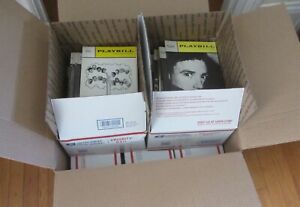
Sold on eBay February 17th, 2024
Huge lot of 337 BROADWAY PLAYBILLS late 1950's to 1970's only - UNIQUE PLAYBILLS
*** HUGE PRICE REDUCTION ***You're looking a HUGE lot of 337 of random BROADWAY PLAYBILLS from the late 1950's to the early 1970's only. All the playbills are unique for the theatre and years of issue. In other words, there are no exact duplicates, but plays from the same theater for a different date with different cover and contents. These programs are used, but in good vintage condition overall. Some of the programs are in better condition than others (none of them is complete beat up). The programs have imperfections such as: corner dings, creases, fold marks, writing (like a date on the show), sticker on cover page (with date), staple marks (from ticket stub), clear tape on corner of cover page, very small insignificant tears, minor cover page/spine wear, discoloration or staining due to age, and other similar imperfections. See pictures. Other minor flaws may be present. What you see is what you get. A few of these programs may come with original inserts. To be sold as a lot only. Great starter collection or opportunity to add to your playbill collection Please note: I threw in some extra free (unique) playbills with condition issues (like loose cover page, more staining, etc.) to bump the actual number of playbills to 348.Here's a link to my UPS, USPS or FedEx Ground shipping within Continental US. Priority Mail international shipping is $250.Please ask any questions before making a purchase. Thanks and good luck! Complete list of programs in alphabetical order:1.) Actors Studio Theater, The Productions 193-1964 (Morosco 1964)2 ) Affair, The (Henry Miller's, 1962)3.) All The Way Home (Belasco, 1960)4.) American Ballet Theatre (Metropolitan Opera House, 19??)5.) An Evening With Yves Montand (Henry Miller's, 19??)6.) Andersonville Trial, The (Henry Miller's, 19??)7.) Annie Get Your Gun (Forrest, 1966)8.) Any Wednesday (Music Box, 1964)9.) Applause (Palace, 1970)10.)Apple Tree, The (Shubert, 1966)11.)Aspern Papers, The (Playhouse, 1962)12.)At The Drop Of Another Hat (Booth, 1966)13.)Auntie Mame (Broadhurst, 19??)14.)Back To Methuselah (Ambassador, 1958)15.)Bajour (Sam S. Shubert, 1965)16.)Baker Street (Broadway, 1965)17.)Ballad Of The Sad Cafe, The (Martin Beck, 1963)18 )Barefoot In The Park (Biltmore, 1964)19 )Barefoot In The Park (Blackstone, 1965)20 )Barefoot In The Park (Biltmore, 1965)21.)Becket (Royale, 1961)22.)Bells Are Ringing (Sam S. Shubert, 1958)23.)Bells Are Ringing (Sam S. Shubert, 1958) different cover issue24 )Ben Franklin In Paris (Lunt-Fontanne, 1964)25.)Best Man, The (Morosco, 1961)26.)Beyond The Fringe (John Golden, 1962)27.)Big Fish, Little Fish (Anta, 1961)28.)Black Comedy (Wilbur, 1967)29.)Black Comedy (Ethel Barrymore, 1967)30.)Bob And Ray The Two And Only (John Golden, 1971)31 )Boeing Boeing (Cort, 1965)32.)Bravo Giovanni (Broadhurst, 1962)33 )Brigadoon (City Center Of Music And Darma, 1963)34 )Butterflies Are Free (Booth, 1970)35.)Bye Bye Birdie (54th Street, 1960)36 )Cabaret (Imperial, 1967)37.)Cactus Flower (Royale, 1966)38 )Calculated Risk (Ambassador, 1963)39 )Caligula (54th Street, 19 )40 )Carnival (Imperial, 1961)41 )Carnival (Imperial, 1962)42 )Cocktail Party, The (Lyceum, 1968)43.)Chips With Everything (Plymouth, 1963)44 )Chinese Prime Minister, The (Royale, 1964)45.)Case Of Libel, A (Longacre, 1964)46.)Coco (Mark Hellinger, 1970)47.)Coco (Mark Hellinger, 1969)48.)Come Blow Your Horn (Brooks Atkinson, 1961)49.)Come Blow Your Horn (Shubert, 1969)50.)Comedy Francaise, The (City Center Of Music and Drama, 1961)51.)Comes A Day (Ambassador, 19 )52 )Conduct Unbecoming (Ethel Barrymore, 1970)53 )Country Wife, The (Henry Miller's, 1957)54 )Country Wife, The (Henry Miller's, 1957) different cover issue55 )Critic s Choice (Ethel Barrymore, 1961)56.)Cry For Us All (Broadhurst, 1970)57.)Cue For Passion (Henry Miller's, 19??)58.)D'Oyly Carte Opera Company, The (New York City Center, 1964)59.)Danny Kaye (Ziegfeld, 1963)60.)Dark At The Top Of The Stairs, The (Music Box, 19 )61 )Delicate Balance, A (Martin Beck, 1966)62.)Destry Rides Again (Imperial, 19 )63 )Devil s Advocate, The (Billy Rose, 1961)64 )Devils The (Broadway, 1963)65.)Dinner At Eight (Alvin, 1967)66 )Disenchanted The (Coronet, 1959)67 )Donnybrook (46th St., 1961)68.)Do Re Mi (St. James, 1961)69 )Elizabeth The Queen (City Center Of Music And Drama, 1966)70 )Entertainer The (Royale, 1958)71 )Entertainer The (Royale, 1958) different cover issue72 )Epitaph For George Dillon (John Golden, 1958)73 )Epitaph For George Dillon (Henry Miller's, 1959)74.)Family Affair, A (Billy Rose 1962)75 )Family Reunion, The (Phoenix, 1958)76 )Fantasticks The (Circle In The Square, 1970)77.)Far Country, A (Music Box, 1961)78 )Fightinh Cock, The (Anta, 1960)79 )Fiddler On The Roof (Broadway, 1971)80 )Fiddler On The Roof (Majestic, 1967)81 )Fiddler On The Roof (Majestic, 1968)82 )Fiddler On The Roof (Majestic, 19 )83 )Fiddler On The Roof (Imperial, 1964)84 )Fiddler On The Roof (Imperial, 1965)85 )Fiddler On The Roof (Imperial, 1967)86 )Finian s Rainbow (46th Street, 1960)87 )Finian s Rainbow (City Center Of Music And Drama, 1967)88 )Finian s Rainbow (City Center Of Music And Drama, 19 )89 )Fiorello (Broadhurst, 1960)90 )Fiorello (Broadway, 1961)91.)Five Finger Exercise (Music Box, 1960)92.)Folies Bergere (Broadway, 1964)93 )Follies (Winter Garden, 1972)94.)Forty Carats (Blackstone, 19??)95.)Forty Carats (Morosco, 1970)96.)49th Cousin, The (Ambassador, 1960)97.)Four On A Garden (National, 1970)98.)Four On A Garden (Colonial, 1970)99.)Funny Girl (Broadway, 1967)100.)Funny Girl (Majestic, 1966)101.)Funny Thing Happened On The Way To The Forum, A (Alvin, 1962)102.)Funny Thing Happened On The Way To The Forum, A (Lunt-Fontanne, 1972)103 )Gang s All Here, The (Ambassador, 1959)104.)Gay Life, The (Sam S. Shubert, 1961)105 )Generation (Morosco, 1966)106 )George M! (Palace, 1968)107.)Girls Against The Boys, The (Alvin, 1959)108 )Gilbert & Sullivan Company (City Center, 1968)109 )Gingerbread Lady, The (Plymouth, 1971)110.)Girl Who Came To Supper, The (Broadway, 1963)111.)Glass Menagerie, The (Brooks Atkinson, 1965)112 )Golden Boy (Majestic, 1965)113 )Golden Fleecing (Henry Miller's, 1959)114 )Golden Rainbow (Shubert, 1968)115 )Goldilocks (Lunt-Fontanne, 1958)116 )Goldilocks (Lunt-Fontanne, 1958) different cover issue117 )Golden Soldier Schweik, The (New York City Center, 1958)118.)Good Soup, The (Plymouth, 1960)119.)Grand Kabuki (City Center Of Music And Drama, 1960)120.)Great White Hope, The (Alvin, 1969)121 )Greenwillow (Alvin, 1960)122.)Guys And Dolls (City Center Of Music And Drama, 1963)123.)Gypsy (Imperial, 1960)124 )H M S Pinafore (Phoenix, 1960)125 )Hadrian VII (Helen Hayes, 1969)126.)Hair (Biltmore, 19??)127.)Half A Sixpence (Broadhurst, 1965)128 )Hamlet (Lunt-Fontanne, 1964)129 )Hamlet (Lunt-Fontanne, 1969)130 )Hamlet (Colonial, 1969)131 )Heartbreak House (Billy Rose, 1959)132 )Hello Dolly! (St. James, 1970)133 )Hello Dolly! (St. James, 1966)134 )Hello Dolly! (St. James, 1967)135 )Hello Dolly! (St. James, 1964)136.)Henry IV, Part 2 (Phoenix, 19 )137 )Here s Love (Sam S. Shubert, 1964)138 )Here s Love (Sam S. Shubert, 1964) different cover issue139 )High Spirits (Alvin, 1964)140.)Hit The Deck The Nautical Musical Comedy Hit! (Jones Beach Marine, 19??)141.)Home (Morosco, 1970)142.)How Now, Dow Jones (Lunt-Fontanne, 1968)143.)How The Other Half Loves (Wilbur, 19??)144.)How To Succeed In Business Without Really Trying (46th St., 1962)145 )Hostage The (Cort, 1960)146 )Hostage The (Eugene O'Neill, 1960)147.)I Do! I Do! (46th St., 1967)148.)I Never Sang For My Father (Longacre, 1968)149.)Illya Darling (Mark Hellinger, 1967)150 )Impossible Years, The (Playhouse, 1966)151 )Indians (Brooks Atkinson, 1969)152.)Irma La Douce (Plymouth, 1960)153 )Irregular Verb To Love, The (Ethel Barrymore, 1963)154 )Ivanov (Shubert, 1966)155 )Jamaica (Imperial, 1958)156.)JB (Anta, 1959)157 )Jennie (Majestic, 1963)158.)Joe Egg (Brooks Atkinson, 1968)159.)Kean (Broadway, 1961)160 )Killing Of Sister George, The (Belasco, 1966)161.)King And I, The (City Center Of Music And Drama, 1968)162.)Kiss Me Kate (CIty Center Of Music And Drama, 1963)163.)La Grosse Valise (Shubert, 1965)164.)La Plume De Ma Tante (Royale, 1959)165.)La Plume De Ma Tante (Royale, 1960)166.)Late Christopher Bean, The (Westport County Playhouse, 19 )167 )Laughs And Other Events (Ethel Barrymore, 1960)168.)Lion In Winter, The (Ambassador, 1966)169 )Little Me (Lunt-Fontanne, 1962)170.)Look Back In Anger (John Golden, 1958)171.)Lost In The Stars (Imperial, 1972)172.)Lute Song (City Center Of Music And Drama, 1959)173 )Luther (St. James, 1963)174.)Luv (Booth, 1965)175 )Majority Of One, A (Sam S. Shubert, 1959)176.)Make A Million (Morosco, 1959)177 )Malcolm (Shubert, 1966)178.)Mame (Winter Garden, 1965)179.)Man For All Seasons, A (Anta, 1962)180.)Man Of La Mancha (Anta Washington Square, 1967)181.)Man Of La Mancha (Valley Forge Music Fair, 1970)182.)Man Of La Mancha (Anta Washington Square, 1965)183.)Man Of La Mancha (National, 1969)184 )Marcel Marceau (City Center Of Music And Drama, 1960)185 )Martha Graham And Dance Company (54th Street, 1965)186 )Martha Graham And Her Dance Company (Adelphi, 1958)187.)Mary, Mary (Helen Hayes, 1961)188.)Me Nobody Knows, The (Helen Hayes, 1971)189 )Midsummer Night's Dream, A (City Center Of Music And Drama, 19??)190.)Milk & Honey (Martin Beck, 1962)191.)Minor Miracle (Henry Miller's, 1965)192 )Miracle Worker, The (Playhouse, 1960)193.)More Stately Mansions (Broadhurst, 1967)194 )Moscow Art Theatre (New York City Center, 195.)Most Happy Fella, The (?, 1957)196.)Most Happy Fella, The (City Center Of Music And Drama, 1966)197.)Mr. President (St. James, 1963)198.)Music Man, The (Majestic, 1959)199.)Music Man, The (Broadway, 1961)200.)Music Man, The (City Center Of Music And Drama, 1965)201.)My Daughter, Your Son (Booth, 1969)202.)My Fair Lady (City Center Of Music And Drama, 1968)203.)My Fair Lady (Broadway, 1962)204.)My Fair Lady (Mark Hellinger, 1959)205.)My Fair Lady (Mark Hellinger, 1961)206.)My Fair Lady (Mark Hellinger, 1958)207.)My Fair Lady (Mark Hellinger, 1959) different cover issue208 )National Repertory Theatre (National, 1967)209 )National Repertory Theatre (Colonial, 1965)210.)Never Too Late (Playhouse, 1963)211.)New Girl In Town (46th Street, 1958)212.)New Girl In Town (46th Street, 1958) different cover issue213 )New York City Opera 38th New York Season Spring 1963 (City Center Of Music And Drama, 1963)214.)New York City Opera 40th New York Season Fall 1964 (City Center Of Music And Drama, 1964)215.)NY City Ballet (City Center Of Music And Drama, 1960)216.)NY City Ballet (City Center Of Music And Drama, 1960) different cover/issue 217.)NY City Ballet (City Center Of Music And Drama, 1961)218.)No Place To Be Somebody (Anta, 1970)219.)No Strings (Broadhurst, 1963)220.)No Strings (54th Street, 1962)221 )Nobody Loves An Albatross (Lyceum, 1964)222.)No, No, Nanette (46th Street, 1971)223.)Odd Couple, The (Plymouth, 1966)224.)Odd Couple, The (Plymouth, 1965)225.)Odd Couple, The (Colonial, 1965) different cover issue226 )Octoroon The (Phoenix, 1961)227.)Oh What A Lovely War (Broadhurst, 1964)228.)Oh! Calcutta! (Belasco, 1972)229 )Oklahoma (City Center Of Music And Drama, 1963)230 )Oliver (Sam S. Shubert, 1964)231 )Oliver (Imperial, 1963)232.)On The Town (Imperial, 1971)233.)110 In The Shade (Broadhurst, 1964)234.)110 In The Shade (Broadhurst, 1963)235.)Our Town (Anta, 1969)236.)Pal Joey (City Center Of Music And Drama, 1961)237 )Passage To India, A (Ambassador, 1962)238.)Paul Taylor Dance Company, The (City Center O Music And Drama, 1969)239.)Penny Wars, The (National, 1969)240 )Period Of Adjustment (Helen Hayes, 1960)241 )Persecution And Assassination Of Marat (Martin Beck, 1966)242 )Philadelphia Here I Come (Helen Hayes, 1966)243 )Physicists The (Martin Beck, 1964)244.)Plays Of Shakespeare, The (Broadway, 1958)245.)Plaza Suite (Plymouth, 1969)246 )Pleasure Of His Company, The (Longacre, 1959)247 )Pleasure And His Company, The (Longacre, 1958)248 )Polish Mime Theatre (New York City Center, 1965)249 )Price The (Morosco, 1968)250 )Price The (46th Street, 1968)251 )Prisoner Of Second Avenue, The (Eugene O'Neill, 1972)252 )Prisoner Of Second Avenue, The (National, 1971)253 )Promenade All! (Alvin, 1972)254 )Promises Promises (Shubert, 1971)255 )Purlie (Broadway, 19 )256 )Purlie (National, 1972)257 )Purlie (Winter Garden, 1971)258.)Rape Of The Belt, The (Martin Beck, 1960)259 )Rehearsal The (Royale, 1963)260 )Repertory Theater Of Lincoln Center For The Performing Arts (Lincoln Center, 1965)261 )Rhinoceros (Longacre, 1961)262.)Roar Of The Greasepaint - The Smell Of The Crowd (American Theatre Saint Louis, 1967)263.)Roar Of The Greasepaint - The Smell Of The Crowd (Sam S. Shubert, 1965)264.)Roar Of The Greasepaint - The Smell Of The Crowd (Shubert, 1965)265.)Rose Tattoo, The (City Center Of Music And Drama, 1966)266 )Rosencrantz And Guldenstern Are Dead (Eugene O'Neill, 1965)267 )Rosencrantz And Guldenstern Are Dead (Shubert, 1969)268 )Rosencrantz And Guldenstern Are Dead (Alvin, 1967)269.)Ross (Eugene O'Neill, 1962)270 )Rothschilds The (Lunt-Fontanne, 1970)271.)Say, Darling (Anta, 1958)272.)Say, Darling (Anta, 1958) different cover issue273 )Say Darling (Anta, 19??)274.)1776 (46th Street, 1970)275.)1776 (Majestic. 1971)276 )Sherry (Alvin, 1967)277.)Sign In Sidney Brustein's Window (Henry Miller's, 1965)278 )Skyscraper (Lunt-Fontanne, 1965)279 )Sleuth (National, 1970)280 )Sleuth (Music Box, 1971)281.)South Pacific (City Center Of Music And Drama, 1965)282 )Spofford (Anta, 1968)283.)Sound Of Music, The (Lunt-Fontanne, 1960)284.)Sound Of Music, The (Mark Hellinger, 1963)285.)Sound Of Music, The (National (1963)286.)Star Spangled Girl, The (Plymouth, 1966)287.)Story Theatre (Ambassador, 1970)288 )Strange Interlude (Hudson, 1963)289 )Subject Was Roses, The (Helen Hayes, 1965)290 )Subways Are For Sleeping (St. James, 1962)291.)Sugar (Majestic, 1972)292 )Sunday In New York (John Golden, 1962)293 )Sunrise At Campobello (Cort, 1958)294.)Sweet Bird Of Youth (Martin Beck, 1959)295.)Take Her, She's Mine (Biltmore, 1962)296.)Take Her, She's Mine (Biltmore, 1961)297.)Take Me Along (Sam S. Shubert, 19??)298.)Taste Of Honey, A (Lyceum, 1960)299 )Tchin Tchin (Plymouth. 1962)300 )Tenderloin (46th Street, 1960)301 )Tenderloin (46th Street, 1960)302.)Tenth Man, The (Booth, 1959)303 )Theatre De France (New York City Center, 1964)304 )There s A Girl In My Soup (Music Box, 1968)305 )There s A Girl In My Soup (Music Box, 1967)306.)Third Best Sport (Ambassador, 1959)307.)Time Remembered (Morosco, 1958)308.)Touch Of The Poet, A (Helen Hayes, 1959)309.)Touch Of The Poet, A (Helen Hayes, 19 )310 )Tovarich (Broadway, 1963)311.)Toys In The Attic (Hudson, 1960)312.)Toys In The Attic (Hudson, 1960) different cover issue313 )Travita La (City Center Of Music And Drama, 1960)314.)12th Night, The (Broadway, 1958)315.)Twigs (Plymouth 1972)316 )Twigs (Broadhurst, 1971)317.)Two By Two (Imperial, 1970)318.)Two For The Seesaw (Booth, 1958)319.)Two For The Seesaw (Booth, 1958) different cover issue320 )Two Gentlemen Of Verona (St. James, 1972)321 )Unsinkable Molly Brown, The (Winter Garden, 1961)322 )Visit The (New York City Center, 1960)323 )Visit The (Morosco, 1958)324 )Visit The (Lunt-Fontanne, 1958)325.)Wait A Minim! (John Golden, 1966)326 )Walking Happy (Lunt-Fontanne, 1966)327.)West Side Story (City Center Of Music And Drama, 1964)328.)What Makes Sammy Run? (54th Street, 1964)329 )Where s Daddy? (Billy Rose, 1966)330.)Who Was That Lady I Saw You With? (Martin Beck, 1958)331.)Who's Afraid Of Virginia Woolf? (Billy Rose, 1962)332 )Wonderful Town (City Center Of Music And Drama, 1967)333.)You Know I Can't Hear You When The Water's Running (Ambassador, 1968)334.)You Know I Can't Hear You When The Water's Running (Ambassador, 1967)335 )You re A Good Man Charlie Brown (Ciricle In The Square at Ford's Theatre, 1971)336.)Zizi Jeanmaire (Broadway, 1964)337.)Zorba (Imperial, 1969)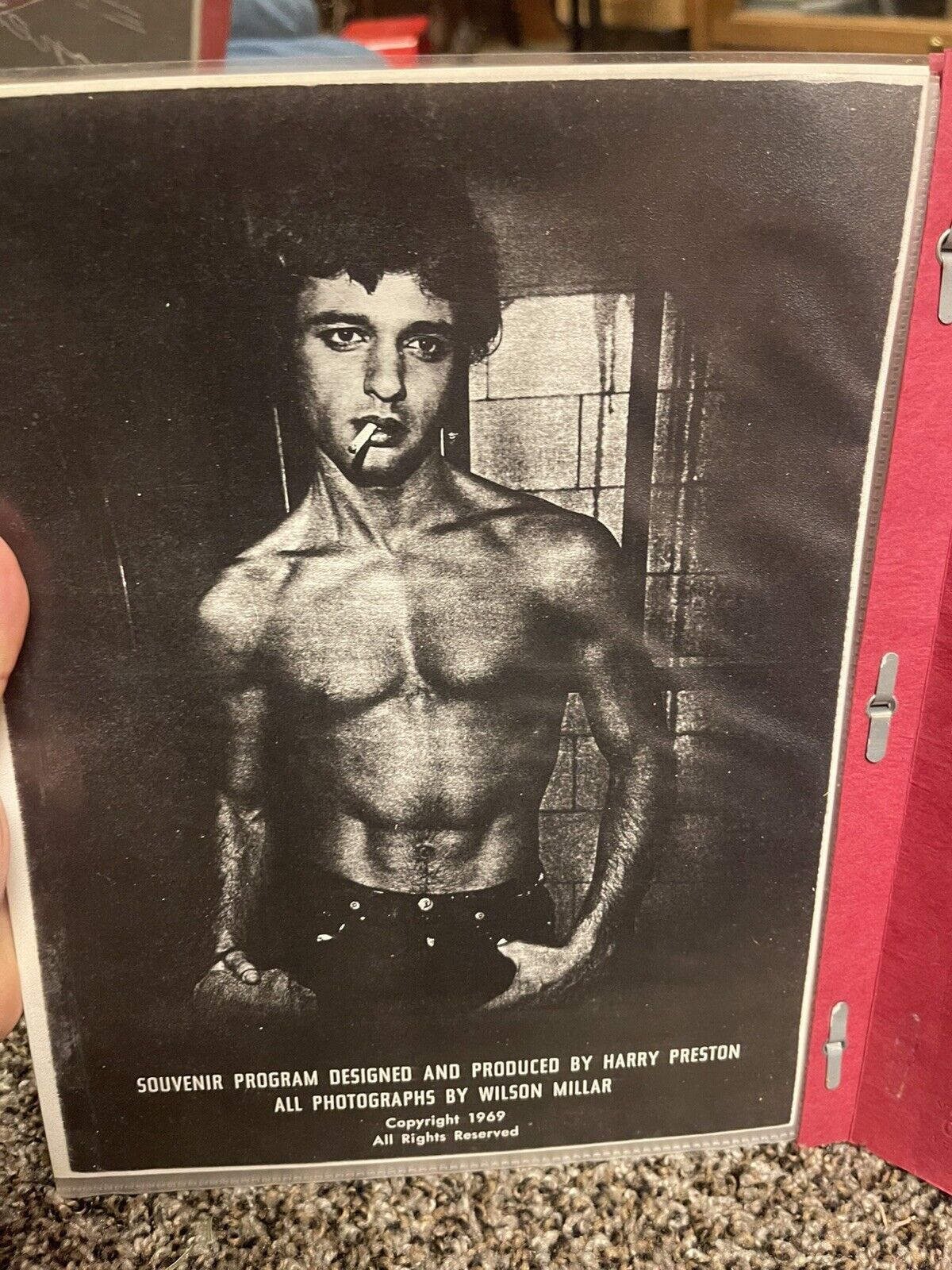
Sold on eBay March 23rd, 2025
1969 EXTREMELY RARE Fortune and men’s eyes Original Cast ( souvenir program)
This is from 1969. It’s the souvenir program with members of the original Los Angeles cast for the play fortune and men’s eyes directed by Sal Mineo. It’s a fantastic copy sealed each page is protected in great condition. Lots of amazing photos. The souvenir program was designed and produced by Harry Preston, all photographs by Wilson Miller copyright 1969 a very rare lookat gay life in the 1960s.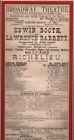
Sold on eBay August 18th, 2024
*EDWIN BOOTH RARE LARGE 1891 DOUBLE MATTED FAREWELL TO THE STAGE BROADSIDE*
A rare large original March 21, 1891 broadside, handsomely double matted for display in black and red, for Edwin Booth's final stage engagement in Manhattan. Booth retired from the stage two weeks later at the Brooklyn Academy of Music. Lawrence Barrett is billed as sharing the stage with Booth, but alas, he didn't. He died the day before on March 20. This was probably the last bill to list Lawrence Barrett. Booth carried on without his partner for the next two weeks and then ended his illustrious stage career. Dimensions seventeen by eight inches, with broadside twelve and a half by four and a half inches. Light wear otherwise fine. An extraordinary display piece of the greatest actor America has ever known. See Edwin Booth and and the Booth family's extraordinary biographies below.Shipping discounts for multiple purchases. Credit cards accepted with Paypal. Inquiries always welcome. Please visit my other eBay items for more early theatre and historical autographs, photographs and programs and great singer, actor, and actress cabinet photos and CDV's.From Wikipedia:The Booth family was an English American theatrical family of the 19th century. Its most famous and well known members were Edwin Booth, one of the leading actors of his day, and John Wilkes Booth, who assassinated Abraham Lincoln.The patriarch was Junius Brutus Booth, a London-born lawyer's son who eventually became an actor after he attended a production of Othello at the Covent Garden theatre. The prospects of fame, fortune, and freedom were very appealing to young Booth, and he displayed remarkable talent from an early age, deciding on a career in the theatre by the age of 17. He performed roles in several small theaters throughout England, and joined a tour of the Low Countries in 1814, returning the following year to make his London debut.Booth abandoned his wife and their young son in 1821 and ran off to the United States with Mary Ann Holmes, a London flower girl. They settled on some 150 acres in Harford County near Baltimore and started a family; they had 10 children, six of whom survived to adulthood [1][2]Junius Sr. and Edwin toured in California during the Gold Rush.[citation needed] Edwin bought an interest in the Winter Garden Theatre at 667 Broadway in New York City together with his brother-in-law John Sleeper Clarke. The brothers John Wilkes, Edwin, and Junius Brutus, Jr. performed there in the play Julius Caesar at a benefit in 1864, the only time they were seen together on a stage, playing Mark Antony, Brutus, and Cassius, respectively Junius Brutus Booth (1796–1852) brought his mistress Mary Ann Holmes, who bore him 10 children, to the United States.He also wrote many letters in fits of drunken anger and madness to President Andrew Jackson threatening assassination. He requested that two prisoners who had been sentenced to death for piracy, named De Ruiz and De Soto, be pardoned, else: "I will cut your throat whilst you are sleeping." This letter would later be recanted by Junius, stating, "May god preserve General Jackson and this happy republic [4]Junius Brutus Booth Jr. (1821–1883) was married to Agnes Booth. Junius Jr. never achieved the same fame as his brothers, but his third wife Agnes was popular.Their son Sydney Barton Booth (1877–1937) was an actor well into the era of modern film [5]Edwin Thomas Booth (1833–1893) came to be the foremost American Shakespearean actor of his day. He founded The Players, a New York City actors' club which continues to the present day.Edwin's grandson Edwin Booth Grossman was a painter of some note.Asia Frigga Booth (1835–1888) married John Sleeper Clarke, an actor/comedian who was briefly imprisoned in the aftermath of the assassination. They then emigrated to Britain, where he became a successful theatre manager.Creston Clarke[6] and Wilfred Clarke,[7] sons of John and Asia, were noted actors in their day.John Wilkes Booth (1838–1865) was a popular young star in less serious fare than his brothers.A Confederate sympathizer during the American Civil War, during a play attended by Abraham Lincoln, Booth took advantage of his access to the theatre to invade the President's box and assassinate the President. He was killed 12 days later by Union soldier Boston CorbettEdwin Thomas Booth (November 13, 1833 – June 7, 1893) was an American actor who toured throughout the United States and the major capitals of Europe, performing Shakespearean plays. In 1869, he founded Booth's Theatre in New York.[2] Some theatrical historians consider him the greatest American actor, and the greatest Prince Hamlet, of the 19th century.[3] His achievements are often overshadowed by his relationship with his younger brother, actor John Wilkes Booth, who assassinated President Abraham Lincoln.Booth was born in Bel Air, Maryland, into the Anglo-American theatrical Booth family. He was the son of the famous actor, Junius Brutus Booth, an Englishman, who named Edwin after Edwin Forrest and Thomas Flynn, two of Junius' colleagues. He was the elder brother of John Wilkes Booth, himself a successful actor who gained notoriety as the assassin of President Lincoln.Nora Titone, in her book My Thoughts Be Bloody, recounts how the shame and ambition of Junius Brutus Booth's three actor sons, Junius Brutus Booth, Jr. (who never achieved the stage stardom of his two younger actor brothers), Edwin Booth, and John Wilkes Booth, spurred them to strive, as rivals, for achievement and acclaim—Edwin a Unionist, and John Wilkes, a Confederate and the assassin of Abraham Lincoln [4]CareerIn early appearances, Booth usually performed alongside his father, making his stage debut as Tressel or Tressil in Colley Cibber's version of Richard III in Boston on September 10, 1849. His first appearance in New York City was in the character of Wilford in The Iron Chest, which he played at the National Theatre in Chatham Street, on the 27th of September 1850. A year later, on the illness of the father, the son took his place in the character of Richard III.[5]After his father's death in 1852, Booth went on a worldwide tour, visiting Australia and Hawaii, and finally gaining acclaim of his own during an engagement in Sacramento, California, in 1856.[6]Before his brother assassinated Lincoln, Edwin had appeared with his two brothers, John Wilkes and Junius Brutus Booth Jr., in Julius Caesar in 1864.[7] John Wilkes played Marc Antony, Edwin played Brutus, and Junius played Cassius.[8] It was a benefit performance, and the only time that the three brothers appeared together on the same stage.[9] The funds were used to erect a statue of William Shakespeare that still stands in Central Park just south of the Promenade. Immediately afterwards, Edwin Booth began a production of Hamlet on the same stage, which came to be known as the "hundred nights Hamlet", setting a record that lasted until John Barrymore broke the record in 1922, playing the title character for 101 performances From 1863 to 1867, Booth managed the Winter Garden Theatre in New York City, mostly staging Shakespearean tragedies. In 1863, he bought the Walnut Street Theatre in Philadelphia [10]After John Wilkes Booth's assassination of President Lincoln in April 1865, the infamy associated with the Booth name forced Edwin Booth to abandon the stage for many months. Edwin, who had been feuding with John Wilkes before the assassination, disowned him afterward, refusing to have John's name spoken in his house.[11] He made his return to the stage at the Winter Garden Theatre in January 1866, playing the title role in Hamlet,[6] which would eventually become his signature role.Acting styleEdwin's acting style was distinctly different from that of his father. While the senior Booth was, like his contemporaries Edmund Kean and William Charles Macready, strong and bombastic, favoring characters such as Richard III, Edwin played more naturalistically with a quiet, more thoughtful delivery, tailored to roles like Hamlet.Later lifeBooth was married to Mary Devlin from 1860 to 1863, the year of her death. They had one daughter, Edwina, born on December 9, 1861, in London. He later remarried, wedding his acting partner Mary McVicker in 1869, and became a widower again in 1881.Edwin Booth with daughter Edwina, circa 1864Portrait of Edwin Booth by John Singer Sargent, 1890, which hung at The Players clubhouse. Now in the collection of the Amon Carter Museum of American Art.In 1869, Edwin acquired his brother John's body after repeatedly writing to President Andrew Johnson pleading for it. Johnson finally released the remains, and Edwin had them buried, unmarked, in the family plot at Green Mount Cemetery in Baltimore.In 1888, Booth founded The Players, a private club for performing, literary, and visual artists and their supporters, and dedicated his home on Gramercy Park to it.His final performance was, fittingly, in his signature role of Hamlet, in 1891 at the Brooklyn Academy of Music.Robert Lincoln rescueEdwin Booth saved Abraham Lincoln's son,[12] Robert, from serious injury or even death. The incident occurred on a train platform in Jersey City, New Jersey. The exact date of the incident is uncertain, but it is believed to have taken place in late 1864 or early 1865. Robert Lincoln recalled the incident in a 1909 letter to Richard Watson Gilder, editor of The Century Magazine.The incident occurred while a group of passengers were late at night purchasing their sleeping car places from the conductor who stood on the station platform at the entrance of the car. The platform was about the height of the car floor, and there was of course a narrow space between the platform and the car body. There was some crowding, and I happened to be pressed by it against the car body while waiting my turn. In this situation the train began to move, and by the motion I was twisted off my feet, and had dropped somewhat, with feet downward, into the open space, and was personally helpless, when my coat collar was vigorously seized and I was quickly pulled up and out to a secure footing on the platform. Upon turning to thank my rescuer I saw it was Edwin Booth, whose face was of course well known to me, and I expressed my gratitude to him, and in doing so, called him by name.Booth did not know the identity of the man whose life he had saved until some months later, when he received a letter from a friend, Colonel Adam Badeau, who was an officer on the staff of General Ulysses S. Grant. Badeau had heard the story from Robert Lincoln, who had since joined the Union Army and was also serving on Grant's staff. In the letter, Badeau gave his compliments to Booth for the heroic deed. The fact that he had saved the life of Abraham Lincoln's son was said to have been of some comfort to Edwin Booth following his brother's assassination of the president Statue of Booth as Hamlet, Gramercy Park by Edmond T. Quinn, circa 1916Booth's TheatreBooth's Theatre Playbill of his Richard III circa 1872In 1867, a fire damaged the Winter Garden Theatre, resulting in the building's subsequent demolition. Afterwards, Booth built his own theatre, an elaborate structure called Booth's Theatre in Manhattan, which opened on February 3, 1869, with a production of Romeo and Juliet starring Booth as Romeo, and Mary McVicker as Juliet. Elaborate productions followed, but the theatre never became a profitable or even stable financial venture. The panic of 1873 caused the final bankruptcy of Booth's Theatre in 1874. After the bankruptcy, Booth went on another worldwide tour, eventually regaining his fortune DeathEdwin Booth had a small stroke in 1891, which precipitated his decline. He suffered another stroke in April 1893 and died June 7, 1893, in his apartment in The Players clubhouse. He was buried next to his first wife at Mount Auburn Cemetery in Cambridge, Massachusetts. His bedroom in the club has been kept untouched since his death.[13] The New York Times reported his death [14]Exhumation requestIn December 2010, descendants of Edwin Booth reported that they obtained permission to exhume the Shakespearean actor's body to obtain DNA samples to compare with a sample of his brother John's DNA to refute the rumor he had escaped after the assassination. However, Bree Harvey, a spokesperson from the Mount Auburn Cemetery in Cambridge, Massachusetts, where Edwin Booth is buried, denied reports that the family had contacted them and requested to exhume Edwin's body.[15] The family hopes to obtain DNA samples from artifacts belonging to John Wilkes, or from remains such as vertebrae stored at the National Museum of Health and Medicine in Maryland [16][17] On March 30, 2013, museum spokesperson Carol Johnson announced that the family's request to extract DNA from the vertebrae had been rejected [18]DramatizationsA number of modern dramatizations have been made of Edwin Booth's life, on both stage and screen. One of the best known is the 1955 film Prince of Players written by Moss Hart, based loosely on the popular book of that name by Eleanor Ruggles. It was directed by Philip Dunne and stars Richard Burton and Raymond Massey as Edwin and Junius Brutus Booth, Sr., with Charles Bickford and Eva Le Gallienne, the latter of whom plays Gertrude to Burton's Hamlet. The film depicts events in Booth's life well before, and then surrounding, the assassination of Lincoln by Booth's younger brother.[19]The opening scenes of Prince of Players are very similar to scenes in the earlier 1946 John Ford western My Darling Clementine. In that movie, the character of Granville Thorndyke (as acted by Alan Mowbray) is an obvious nod to Booth's father Junius, and the scenes portray essentially the same sequence where the great actor has to be retrieved from a bar and dragged back to the theatre where he is overdue to give a performance in front of a restless audience [20][21]The Brothers BOOTH!, by W. Stuart McDowell, which focuses on the relationships of the three Booth brothers leading up to the assassination of Lincoln, was workshopped and given a series of staged readings featuring David Strathairn, David Dukes, Angela Goethals, Maryann Plunkett, and Stephen Lang at the New Harmony Project,[22] and at The Guthrie Theatre Lab in Minneapolis, and later presented in New York at the Players' Club, the Second Stage Theatre, and the Boston Athenaeum. It was given its first fully staged professional production at the Bristol Riverside Theatre outside Philadelphia in 1992 [23][24][25] A second play by the same name, The Brothers Booth, which focuses on "the world of the 1860s theatre and its leading family"[26] was written by Marshell Bradley and staged in New York at the Perry Street Theatre in 2004.Oliver Ingraham Lay: Edwin Booth as Hamlet, 1887Austin Pendleton's play, Booth, which depicts the early years of the brothers Edwin, Junius, and John Wilkes Booth and their father, was produced off Broadway at the York Theatre, starring Frank Langella as Junius Brutus Booth, Sr. In a review, the play was called "a psychodrama about the legendary theatrical family of the 19th century" by The New York Times.[27] Pendleton had adapted this version from his earlier work, Booth Is Back, produced at Long Wharf Theatre in New Haven, Connecticut, in the 1991-1992 season.The Tragedian, by playwright and actor Rodney Lee Rogers, is a one-man show about Booth that was produced by PURE Theatre of Charleston, South Carolina, in 2007. It was revived for inclusion in the Piccolo Spoleto Arts Festival in May and June 2008.[28]A play by Luigi Creatore called Error of the Moon played off-Broadway on Theatre Row in New York City from August 13 to October 10, 2010. The play is a fictionalized account of Booth's life, hinging on the personal, professional, and political tensions between brothers Edwin and John Wilkes, leading up to the assassination of Lincoln.[29]In 1959, the actor Robert McQueeney played Booth in the episode "The Man Who Loved Lincoln" on the ABC/Warner Brothers western television series, Colt .45, starring Wayde Preston as the fictitious undercover agent Christopher Colt, who in the story line is assigned to protect Booth from a death threat.[30]In 1960, the anthology series television series Death Valley Days broadcast "His Brother's Keeper", in which Booth visits a small town after the Lincoln assassination, with one of the town's influential citizens trying to have him run out of town.In 1966, Martin Landau played Edwin Booth in the episode "This Stage of Fools" of the NBC western television series, Branded, starring Chuck Connors as Jason McCord. In the story line, McCord takes a job as the bodyguard to the actor Edwin Booth, brother of the presidential assassin, John Wilkes Booth [31][32]In 2013, Will Forte played Edwin Booth in the "Washington, D.C." episode of the Comedy Central's series, Drunk History, created by Derek Waters.In 2014, Edwin Booth was played by Gordon Tanner in The Pinkertons episode, "The Play's the Thing" (S1:E3). In the episode, both the "Hundred nights Hamlet" and Edwin's rescue of Robert Lincoln are mentioned LegacyGrave of Edwin BoothBooth left a considerable estate upon his death. He left charitable bequests that furthered the development of the acting profession and the treatment of mental illness. He left bequests of $5,000 each (almost $150,000 in 2021 dollars) to the Actor's' Fund, the Actors' Association of Friendship of the City of New York (Edwin Forrest Lodge), The Actors' Association of Friendship of the City of Philadelphia (Shakespeare Lodge), the Asylum Fund of New York and the Home for Incurables (West Farms, New York).[33] Other examples of his legacy include:The Players still exists in its original clubhouse at 16 Gramercy Park South in Manhattan.[34] A statue of Booth as Hamlet, by Edmond T. Quinn, has been the centerpiece of the private Gramercy Park since 1916. It can be seen by the public through the south gate of the park.Booth left a few recordings of his voice preserved on wax cylinder. One of them can be heard on the Naxos Records set Great Historical Shakespeare Recordings and Other Miscellany.[35] Another place to hear his preserved voice is on the site shown here [3:34][36] Booth's voice is barely audible with all the surface noise, but what can be deciphered reveals it to have been rich and deep.Memorials of Booth can still be found around Bel Air, Maryland. In front of the courthouse is a fountain dedicated to his memory. Inside the post office is a portrait of him. Also, his family's home, Tudor Hall, still stands and was bought in 2006 by Harford County, Maryland, to become a museum.A chamber in Mammoth Cave in Kentucky is called "Booth's Amphitheatre" – so called because Booth entertained visitors there.The Springer Opera House in Columbus, Georgia, is said to be haunted by the ghost of Edwin Booth Broadway s Booth Theatre was the first, and remains the oldest, Broadway theatre to be named in honor of an actor.Stephen Sondheim's musical Assassins mentions Edwin in "The Ballad of Booth" with the lyrics: "Your brother made you jealous, John/You couldn't fill his shoes."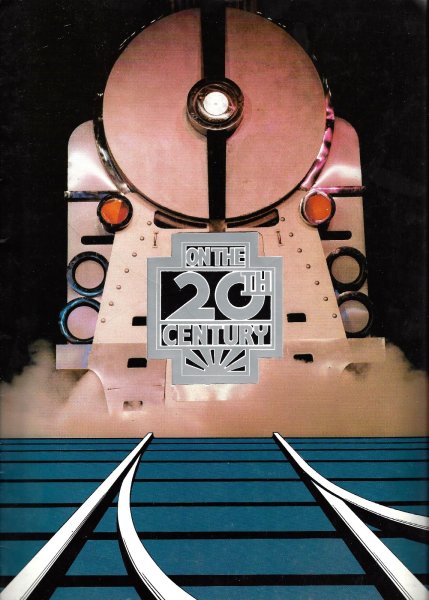
Sold on eBay April 12th, 2025
Julia McKenzie "ON THE 20TH CENTURY" Keith Michell 1980 London Souvenir Program
This is a rare souvenir program from the Original West End production of the CY COLEMAN, BETTY COMDEN and ADOLPH GREEN musical comedy "ON THE TWENTIETH CENTURY" at Her Majesty's Theatre in London. (The Original Broadway production opened February 19th, 1978 at the St. James Theatre in New York City and ran for 449 performances. The London production opened March 19th, 1980 and ran for 165 performances.) ..... The musical starred KEITH MICHELL and JULIA McKENZIE and featured DAVID HEALY, MARK WYNTER, FRED EVANS, ANN BEACH, DAVID BEXON, VALERIE LEON, RICHARD MANUEL, RICARDO SIBELO, WILLIAM VANDERPUYE, EWART JAMES WALTERS and JOHNNY WORTHY ..... CREDITS: Music by CY COLEMAN ("Wildcat", "Sweet Charity", "Little Me", "Seesaw", "I Love My Wife", "On the Twentieth Century", "Barnum", "City of Angels", "The Will Rogers Follies"); Book and Lyrics by BETTY COMDEN and ADOLPH GREEN ("On the Town", "Wonderful Town", "Bells are Ringing", "Say, Darling", "Do Re Mi", "Two on the Aisle", "Subways are for Sleeping", "Fade Out, Fade In", "Hallelujah, Baby!", "On the Twentieth Century", "Applause", "A Doll's Life", "The Will Rogers Follies") based on plays by BEN HECHT, CHARLES MAC ARTHUR and BRUCE MILLHOLLAND; Sets designed by ROBIN WAGNER; Costumes designed by FLORENCE KLOTZ; Originally Choreographed by LARRY FULLER; Choreography Recreated by GERALD TEIJELO; Directed by PETER COE; Produced by HAROLD FIELDING ..... DETAILS: The oversized 20 page program measures 9" X 12" inches, has a die-cut cover and includes individual photos of each of the leading actors, historical and promotional text and several pages of full color production photos ..... CONDITION: With the exception of minor edge wear, this rare program is in excellent condition and will make a wonderful addition to the collection of any musical theatre aficionado or historian. This item will be carefully packaged in a protective sleeve and backed by stiff cardboard.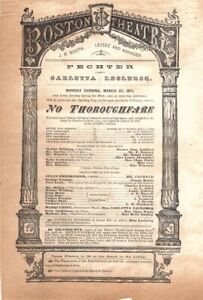
Sold on eBay February 25th, 2024
*CHARLES DICKENS & WILKIE COLLINS RARE ORIGINAL 1871 NO THOROUGHFARE PROGRAM*
An rare and extraordinary original museum quality MArch 1871 program for Charles Dickens and Wilkie Collins's play No Thoroughfaare at the Boston Theatre, managed by Junius Brutus Booth Jr. Dimensions ten nine a half by six and a half inches. Light wear otherwise good. See Charles Dickens and Wilkie Collins's extraordinary biographies below. Ships USPS insured in USA and Global Priority overseas. Shipping discounts for multiple purchases. Inquiries always welcome. Please visit my other eBay items for more early theatre, opera, film, and historical autographs, photographs, programs and broadsides and great actor and actress cabinet photos and CDV's. From Wikipedia: Charles John Huffam Dickens (/7 February 1812 – 9 June 1870) was an English writer and social critic. He created some of the world's best-known fictional characters and is regarded by many as the greatest novelist of the Victorian era.[1] His works enjoyed unprecedented popularity during his lifetime, and by the 20th century critics and scholars had recognised him as a literary genius. His novels and short stories enjoy lasting popularity [2][3]Born in Portsmouth, Dickens left school to work in a factory when his father was incarcerated in a debtors' prison. Despite his lack of formal education, he edited a weekly journal for 20 years, wrote 15 novels, five novellas, hundreds of short stories and non-fiction articles, lectured and performed readings extensively, was an indefatigable letter writer, and campaigned vigorously for children's rights, education, and other social reforms Dickens s literary success began with the 1836 serial publication of The Pickwick Papers. Within a few years he had become an international literary celebrity, famous for his humour, satire, and keen observation of character and society. His novels, most published in monthly or weekly instalments, pioneered the serial publication of narrative fiction, which became the dominant Victorian mode for novel publication [4][5] Cliffhanger endings in his serial publications kept readers in suspense.[6] The installment format allowed Dickens to evaluate his audience's reaction, and he often modified his plot and character development based on such feedback.[5] For example, when his wife's chiropodist expressed distress at the way Miss Mowcher in David Copperfield seemed to reflect her disabilities, Dickens improved the character with positive features.[7] His plots were carefully constructed, and he often wove elements from topical events into his narratives.[8] Masses of the illiterate poor chipped in ha'pennies to have each new monthly episode read to them, opening up and inspiring a new class of readers [9]Dickens was regarded as the literary colossus of his age.[10] His 1843 novella, A Christmas Carol, remains popular and continues to inspire adaptations in every artistic genre. Oliver Twist and Great Expectations are also frequently adapted, and, like many of his novels, evoke images of early Victorian London. His 1859 novel, A Tale of Two Cities, set in London and Paris, is his best-known work of historical fiction. Dickens has been praised by fellow writers—from Leo Tolstoy to George Orwell and G. K. his realism, comedy, prose style, unique characterisations and social criticism. On the other hand, Oscar Wilde, Henry James, and Virginia Woolfcomplained of a lack of psychological depth, loose writing, and a vein of saccharine sentimentalism. The term Dickensian is used to describe something that is reminiscent of Dickens and his writings, such as poor social conditions or comically repulsive characters William Wilkie Collins (8 January 1824 – 23 September 1889) was an English novelist and playwright known especially for The Woman in White (1859), a mystery novel and early sensation novel, and for The Moonstone (1868), which established many of the ground rules of the modern detective novel and is also perhaps the earliest clear example of the police procedural genre [1][2]Born to the London painter William Collins and his wife, Harriet Geddes, he moved with them to Italy when he was twelve, living there and in France for two years, learning both Italian and French. He worked initially as a tea merchant. After Antonina, his first novel, was published in 1850, Collins met Charles Dickens, who became his friend and mentor. Some of Collins' work appeared in Dickens' journals Household Words and All the Year Round. They also collaborated on drama and fiction. Collins gained financial stability and an international following by the 1860s, but in the 1870s and 1880s, after becoming addicted to the opium he took for his gout, the quality of both his health and his writing declined Collins criticised the institution of marriage. He had relationships with two women: widow Caroline Graves – living with her for most of his life, treating her daughter as his – and the younger Martha Rudd, with whom he had three children.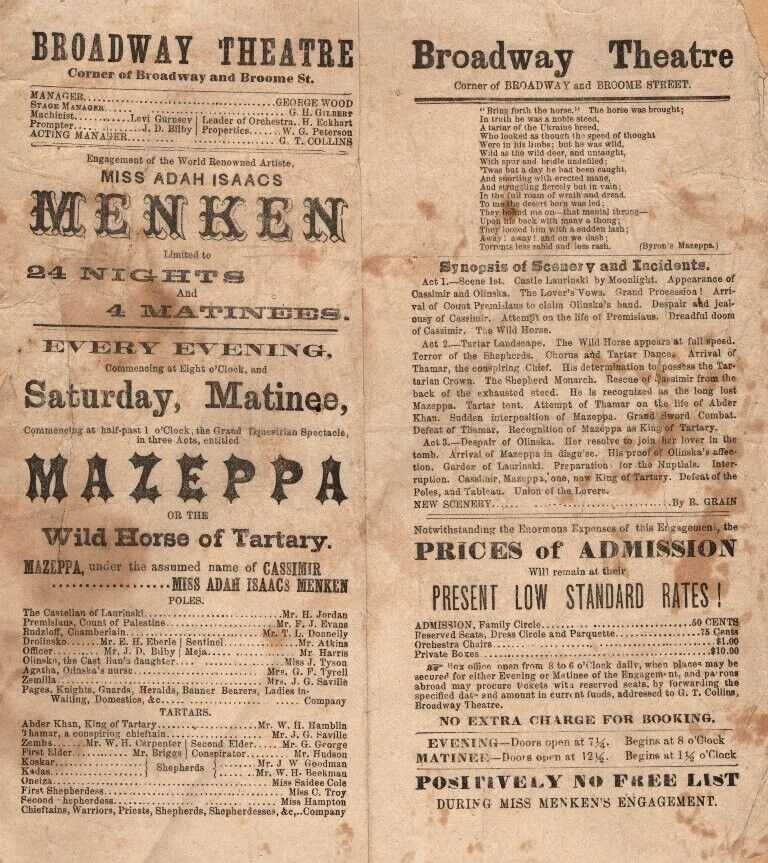
Sold on eBay November 17th, 2024
*ADAH ISSACS MENKEN IN LORD BYRON'S MAZEPPA RARE 1863 PLAY PROGRAM*
Audiences of the 1860s thought she was naked when she rode onstage on her horse wearing only flesh colored tights. She acted with the young Edwin Booth and befriended Walt Whitman. A rare original circa 1863 Broadway Theatre program for Adah Issacs Menken in her greatest and most sensational role in Lord Byron's Mazeppa. Dimensions nine by seven and a half inches lad down to a twelve by nine inch backing. Light wear otherwise good. See Adah Issacs Menken and Lord Byron's extraordinary biograpies below. Combined shipping discounts for multiple purchases. Credit cards accepted with Paypal. Inquiries always welcome. Please visit my other eBay items for more early theatre and historical autographs, photographs and programs and great singer, actor and actress cabinet photos and CDV's. From Wikipedia:Adah Isaacs Menken (June 15, 1835 – August 10, 1868) was an American actress, painter and poet, and was the highest earning actress of her time.[1] She was best known for her performance in the hippodrama Mazeppa, with a climax that featured her apparently nude and riding a horse on stage. After great success for a few years with the play in New York and San Francisco, she appeared in a production in London and Paris, from 1864 to 1866. After a brief trip back to the United States, she returned to Europe. She became ill within two years and died in Paris at the age of 33.[2]Menken told many versions of her origins, including her name, place of birth, ancestry, and religion, and historians have differed in their accounts. Most have said she was born a Louisiana Creole Catholic, with European and African ancestry. A celebrity who created sensational performances in the United States and Europe, she married several times and was also known for her affairs. She had two sons, both of whom died in infancy [3]Though she was better known as an actress, Menken sought to be known as a writer. She published about 20 essays, 100 poems, and a book of her collected poems, from 1855 to 1868 (the book was published posthumously). Early work was devoted to family and after her marriage, her poetry and essays featured Jewish themes. Beginning with work published after moving to New York, with which she changed her style, Menken expressed a wide range of emotions and ideas about women's place in the world. Her collection Infelicia went through several editions and was in print until 1902.Early life and of Menken's early life and origins vary considerably. In her "Some Notes of Her Life in Her Own Hand," published in The New York Times in 1868, Menken said she was born in Bordeaux, France, and lived in Cuba as a child before her family settled in New Orleans. There are many conflicting reports as to Menken's birth name, but she has been called Marie Rachel Adelaide de Vere Spenser and Adah Bertha Theodore, and Ed James, a journalist friend, wrote after her death: "Her real name was Adelaide McCord, and she was born at Milneburg, near New Orleans, on June 15, 1835."[4] Menken's birth year also varies, with some records stating 1835 and some stating 1832. [5] Elsewhere, in 1865, she wrote that her birth name was Dolores Adios Los Fiertes, and that she was the daughter of a French woman from New Orleans and a Spanish-Jewish man.[6] About 1940, the consensus of scholars was that her parents were Auguste Théodore, a free Black man, and Marie, a mixed-race Creole, and Adah was raised as a Catholic. She had a sister and a brother [6]Based on Menken's assertions of being a native of New Orleans, Wolf Mankowitz and others have studied Board of Health records for the city. They have concluded that Ada was born in the city as the legitimate daughter of Auguste Théodore, a free man of color (mixed race) and his wife Magdaleine Jean Louis Janneaux,[4][7] likely also a Louisiana Creole. Ada would have been raised as Catholic. However, in 1990, John Cofran, using census records, said that she was born as Ada C. McCord, in Memphis, Tennessee, in late 1830. He said she was the daughter of an Irish merchant, Richard McCord, and his wife Catherine [8][9] According to Cofran, her father died when she was young and her mother remarried. The family then moved from Memphis to New Orleans.Menken was said to have been a bright student; she became fluent in French and Spanish,[10] and was described as having a gift for languages.[6] As a child, Menken performed as a dancer in the ballet of the French Opera House in New Orleans. In her later childhood, she performed as a dancer in Havana, Cuba, where she was crowned "Queen of the Plaza [10]American as The French Spy, 1863After Cuba, Menken left dance for acting, and began working as an actress in Texas first. According to Gregory Eiselein, she gave Shakespeare readings, and wrote poems and sketches for The Liberty Gazette. She was married for the first time in Galveston County, in February 1855, to G. W. Kneass, a musician. The marriage had ended by sometime in 1856,[6] when she met and in 1856 married the man more generally considered her first husband, Alexander Isaac Menken, a musician who was from a prominent Reform Jewish family in Cincinnati, Ohio.[11]He began to act as her manager, and Ada Menken performed as an actress in the Midwest and Upper South, also giving literary readings. She received decent reviews, which noted her "reckless energy," and performed with men who became notable actors: Edwin Booth in Louisville, Kentucky, and James E. Murdoch in Nashville, Tennessee [12]In 1857, the couple moved to Cincinnati, where Menken created her Jewish roots, telling a reporter that she was born Jewish. She did study Judaism and stayed with the faith, although she never formally converted.[6] In this period, she published poetry and articles on Judaism in The Israelite in Cincinnati.[12] The newspaper was founded by Rabbi Isaac Mayer Wise, who was crucial to the Reform Judaism movement in the United States.[13] She also began to be published in the Jewish Messenger of New York.[6]Ada added an "h" to her first name and an "s" to Isaac, and by 1858 she billed herself as Adah Isaacs Menken. She eventually worked as an actress in New York and San Francisco, as well as in touring productions across the country.[14] She also became known for her poetry and painting. While none of her art was well received by major critics, she became a celebrity [11]At this time, Menken wore her wavy hair short, a highly unusual style for women of the time. She cultivated a bohemian and at times androgynous appearance. She deliberately created her image at a time when the growth of popular media helped to publicize it.[11]In 1859, Menken appeared on Broadway in New York City in the play The French Spy. Her work was not highly regarded by critics. The New York Times described her as "the worst actress on Broadway." The needed] said, "she is delightfully unhampered by the shackles of talent." Menken continued to perform small parts in New York, as well as reading Shakespeare in performance, and giving lectures.[4]Her third husband was John C. Heenan, a popular Irish-American prizefighter whom she married in 1859. Some time after their marriage, the press discovered she did not yet have a legal divorce from Menken and accused her of bigamy. She had expected Menken to handle the divorce, which he eventually did.As John Heenan was one of the most famous and popular figures in America, the press also accused Menken of marrying for his celebrity. She billed herself as Mrs. Heenan in Boston, Providence, Baltimore, and Philadelphia, using his name despite their divorce within a year of marriage.[11] They had a son, who died soon after birth.[10]While in New York, Menken met the poet Walt Whitman and some others of his bohemian circle. She was influenced by his work and began to write in a more confessional style while adhering to common sentimental conventions of the time. In 1860–61, she published 25 poems in the Sunday Mercury, an entertainment newspaper in New York. These were later collected with six more in her only book, Infelicia, published a few months after her death.[12] By publishing in a newspaper, she reached a larger audience than through women's magazines, including both men and women readers who might go to see her perform as an actress.[11]In 1860, Menken wrote a review titled "Swimming Against the Current," which praised Whitman's new edition of Leaves of Grass, saying he was "centuries ahead of his contemporaries [11][12][15] She identified with the controversial poet, and declared her bohemian identity through her support for him.[11] That year, Menken also wrote an article on the 1860 election, an unusual topic for a woman, which further added to her image.[11]When Menken met Charles Blondin, notable for crossing Niagara Falls on a tightrope, the two were quickly attracted to each other. She suggested she would marry him if they could perform a couple's act above the falls. Blondin refused, saying that he would be "distracted by her beauty."[10] The two had an affair, during which they conducted a vaudeville tour across the United States Mazeppa[edit]See also: Cultural legacy of MazeppaMenken in Mazeppa, 1866After it ended, she appealed to her business manager Jimmie Murdock to help her become recognized as a great actress. Murdock dissuaded Menken from that goal, as he knew she had little acting talent.[10] He offered her the "breeches role" (that of a man) of the noble Tartar in the hippodrama Mazeppa, based on the poem of that title by Lord Byron[1] (and ultimately on the life of Ivan Mazepa). At the climax of this hit, the Tartar was stripped of his clothing, tied to his horse, and sent off to his death.[16] The audiences were thrilled with the scene, although the production used a dummy strapped to a horse, which was led away by a handler giving sugar cubes. Menken wanted to perform the stunt herself.[9] Dressed in nude tights and riding a horse on stage, she appeared to be naked and caused a sensation.[9] New York audiences were shocked but still attended and made the play popular.Menken took the production of Mazeppa to San Francisco. Audiences again flocked to the show.[10][17] She became known across the country for this role, and San Francisco adopted her as its performer.In 1862, she married Robert Henry Newell, a humorist and editor of the Sunday Mercury in New York, who had recently published most of her poetry. They were together about three years. Next she wed James Paul Barkley, a gambler, in 1866, but soon returned without him to France, where she was performing. There she had their son, whom she named Louis Dudevant Victor Emanuel Barkley. The baby's godmother was the author George Sand (A. F. Lesser).[1] Louis died in infancy.[1]A previous version of Astley's Amphitheatre, showing the horse ringMenken arranged to play in a production of Mazeppa in London and France for much of 1864 to 1866. Controversy arose over her costume, and she responded to critics in the newspapers of London by saying that she was influenced by classical sculpture, and that her costume was more modest than those of ballet or burlesque. The show opened on October 3, 1864, at the Astley Theatre to "overflowing houses."[18] She was so well known that she was referred to as "the Menken," needing no other name.[11]Jokes and poems were printed about the controversy, and Punch wrote:[18]Here s half the town - if bills be true -To Astley's nightly thronging,To see the Menken throw asideAll to her sex belonging Stripping off woman's modesty,With woman's outward trappings -A barebacked jade on barebacked steed,In Cartlich's old strappings!(The last line refers to John Cartlich, equestrian performer [19])During this time of her greatest earning, she was generous to friends, theatre people in need, and charities.[1] While in Europe, the Menken continued to play to the American public as well, in terms of her image.[11] As usual, she attracted a crowd of male admirers, including such prominent figures as the writer Charles Dickens, the humorist Tom Hood, and the dramatist and novelist Charles Reade.[20]Later with Alexandre Dumas, 1866Playing in a sold-out run of Les pirates de la savane in Paris in 1866, Menken had an affair with the French novelist Alexandre Dumas, père, considered somewhat scandalous as he was more than twice her age. Returning to England in 1867, she struggled to attract audiences to Mazeppa and attendance fell off. During this time she had an affair with the English poet Algernon Charles Swinburne [1]She fell ill in London and was forced to stop performing, struggling with poverty as a result. Few realized that the glamorous star was ill until she collapsed during rehearsal and died a few weeks later.[4] She began preparing her poems for publication and moved back to Paris, where she died on August 10, 1868.[1] She had just written to a friend:I am lost to art and life. Yet, when all is said and done, have I not at my age tasted more of life than most women who live to be a hundred? It is fair, then, that I should go where old people go.[10]How long she had been a consumptive no one knew but, from what is known, she was dead at 33 – the flamelike quality that Dickens had called the “world’s delight” extinguished forever. They buried her in a corner of the little Jewish cemetery in Montparnasse, and on her grave stone are the words, “Thou Knowest,” an epitaph she had chosen from Swinburne, the poet who had said of her, “A woman who has such beautiful legs need not discuss poetry.”She was believed to have died of peritonitis and/or tuberculosis [10] Late twentieth century sources suggest she had cancer.[1] She was buried in Montparnasse Cemetery.[1] The inscription on her tomb reads "Thou knowest."[21]In 1862, Menken had written about her public and private personae:I have always believed myself to be possessed of two souls, one that lives on the surface of life, pleasing and pleased; the other as deep and as unfathomable as the ocean; a mystery to me and all who know me.[5]Her only book, Infelicia, a collection of 31 poems, was published several days after her death.Literary wanted to be known as a writer, but her work was overshadowed by her sensational stage career and private and public life. In total, she published about 20 essays, 100 poems and a book of her collected poems, from 1855 to 1868; the book was published posthumously. Her work was not received well by contemporary critics. George Merriam Hyde, one of the most respected critics of his day, refused to critique Menken's work, saying (privately) that "it would be an insult to himself and his profession".Van Wyck Brooks joked (in public) that "her work is the best example of unintentional wit and accidental humour".Her early work was devoted to family and romance. After her marriage to Menken and her study of Judaism, her poetry and essays for years into the 1860s featured Jewish themes. After her marriage and divorce from Heenan and meeting with writers in New York, she changed her style, adopting some influence from Walt Whitman. She was said to be the "first poet and the only woman poet before the twentieth century" to follow his lead in using free verse.[6] The New York Times reported that Walt Whitman had disassociated himself from Menken's work, implying he thought little of it.Beginning in New York, her poetry expressed a wider range of emotions related to relationships, sexuality, and also about women's struggle to find a place in the world. Her collection Infelicia went through several editions and was in print until 1902. In the late nineteenth century, critics were hard on women writers, and Menken's public notoriety caused even more critical scrutiny of her poems. Later critics (such as A. R. Lloyd in his book, The Great Prize Fight and Graham Gordon in his book Master of the Ring) generally dismiss her work as being devoid of talent. Admirers included Christina Rossetti and Joaquin Miller.George Gordon Byron (later Noel), 6th Baron Byron, FRS (22 January 1788 – 19 April 1824), commonly known simply as Lord Byron, was an English poet and a leading figure in the Romantic movement. Among his best-known works are the lengthy narrative poems Don Juan and Childe Harold's Pilgrimage, and the short lyric "She Walks in Beauty".Byron is regarded as one of the greatest British poets,[1] and remains widely read and influential. He travelled widely across Europe, especially in Italy where he lived for seven years. Later in life, Byron joined the Greek War of Independence fighting the Ottoman Empire, for which many Greeks revere him as a national hero.[2] He died in 1824 at the young age of 36 from a fever contracted while in Missolonghi. Often described as the most flamboyant and notorious of the major Romantics, Byron was both celebrated and castigated in life for his aristocratic excesses, including huge debts, numerous love affairs - with men as well as women, rumours of a scandalous liaison with his half-sister, and self-imposed exile [3]Manfred: A dramatic poem is a poem written in 1816–1817 by Lord Byron. It contains supernatural elements, in keeping with the popularity of the ghost story in England at the time. It is a typical example of a Romantic closet drama.Byron wrote this "metaphysical drama", as he called it, after his marriage failed in scandal amidst charges of sexual improprieties and an incestuous affair between Byron and his half-sister, Augusta Leigh. Attacked by the press and ostracised by London society, Byron fled England for Switzerland in 1816 and never returned. Because Manfred was written immediately after this, and because it regards a main character tortured by his own sense of guilt for an unmentionable offence, some critics consider it to be , or even confessional [1] The unnamed but forbidden nature of Manfred's relationship to Astarte is believed to represent Byron's relationship with his half-sister Augusta.Byron commenced this work in late 1816, only a few months after the famed ghost-story sessions which provided the initial impetus for Mary Shelley's Frankenstein. The supernatural references are made clear throughout the poem.Manfred was adapted musically by Robert Schumann in 1852, in a composition entitled Manfred: Dramatic Poem with music in Three Parts, and later by Pyotr Ilyich Tchaikovsky in his Manfred Symphony. Friedrich Nietzschewas impressed by the poem's depiction of a super-human being, and wrote some music for it.
Sold on eBay June 2nd, 2024
*CHARLES DICKENS: RARE ORIGINAL 1876 OLIVER TWIST ILLUSTRATED BROADSIDE*
An rare and extraordinary original museum quality November 1876 illustrated broadside for Charles Dickens's Oliver Twist. Dimensions ten and a half by eight and a half inches. Edgewear and small tears otherwise good. An amazing historic example of Dickens and theatre history. See Charles Dickens's extraordinary biography and the story of Oliver Twist below. Ships USPS insured in USA and Global Priority overseas. Shipping discounts for multiple purchases. Inquiries always welcome. Please visit my other eBay items for more early theatre, opera, film, and historical autographs, photographs, programs and broadsides and great actor and actress cabinet photos and CDV's. From Wikipedia: Charles John Huffam Dickens (/7 February 1812 – 9 June 1870) was an English writer and social critic. He created some of the world's best-known fictional characters and is regarded by many as the greatest novelist of the Victorian era.[1] His works enjoyed unprecedented popularity during his lifetime, and by the 20th century critics and scholars had recognised him as a literary genius. His novels and short stories enjoy lasting popularity [2][3]Born in Portsmouth, Dickens left school to work in a factory when his father was incarcerated in a debtors' prison. Despite his lack of formal education, he edited a weekly journal for 20 years, wrote 15 novels, five novellas, hundreds of short stories and non-fiction articles, lectured and performed readings extensively, was an indefatigable letter writer, and campaigned vigorously for children's rights, education, and other social reforms Dickens s literary success began with the 1836 serial publication of The Pickwick Papers. Within a few years he had become an international literary celebrity, famous for his humour, satire, and keen observation of character and society. His novels, most published in monthly or weekly instalments, pioneered the serial publication of narrative fiction, which became the dominant Victorian mode for novel publication [4][5] Cliffhanger endings in his serial publications kept readers in suspense.[6] The installment format allowed Dickens to evaluate his audience's reaction, and he often modified his plot and character development based on such feedback.[5] For example, when his wife's chiropodist expressed distress at the way Miss Mowcher in David Copperfield seemed to reflect her disabilities, Dickens improved the character with positive features.[7] His plots were carefully constructed, and he often wove elements from topical events into his narratives.[8] Masses of the illiterate poor chipped in ha'pennies to have each new monthly episode read to them, opening up and inspiring a new class of readers [9]Dickens was regarded as the literary colossus of his age.[10] His 1843 novella, A Christmas Carol, remains popular and continues to inspire adaptations in every artistic genre. Oliver Twist and Great Expectations are also frequently adapted, and, like many of his novels, evoke images of early Victorian London. His 1859 novel, A Tale of Two Cities, set in London and Paris, is his best-known work of historical fiction. Dickens has been praised by fellow writers—from Leo Tolstoy to George Orwell and G. K. his realism, comedy, prose style, unique characterisations and social criticism. On the other hand, Oscar Wilde, Henry James, and Virginia Woolfcomplained of a lack of psychological depth, loose writing, and a vein of saccharine sentimentalism. The term Dickensian is used to describe something that is reminiscent of Dickens and his writings, such as poor social conditions or comically repulsive characters Oliver Twist; or, The Parish Boy's Progress, is the second novel by English author Charles Dickens. It was originally published as a serial from 1837 to 1839, and as a three-volume book in 1838.[1] The story follows the titular orphan, who, after being raised in a workhouse, escapes to London, where he meets a gang of juvenile pickpockets led by the elderly criminal Fagin, discovers the secrets of his parentage, and reconnects with his remaining family.Oliver Twist unromantically portrays the sordid lives of criminals, and exposes the cruel treatment of the many orphans in London in the mid-19th century.[2] The alternative title, The Parish Boy's Progress, alludes to Bunyan's The Pilgrim's Progress, as well as the 18th-century caricature series by painter William Hogarth, A Rake's Progress and A Harlot's Progress.[3]In an early example of the social novel, Dickens satirises child labour, domestic violence, the recruitment of children as criminals, and the presence of street children. The novel may have been inspired by the story of Robert Blincoe, an orphan whose account of working as a child labourer in a cotton mill was widely read in the 1830s. It is likely that Dickens's own experiences as a youth contributed as well, considering he spent two years of his life in the workhouse at the age of 12 and subsequently, missed out on some of his education [4]Oliver Twist has been the subject of numerous adaptations, including a 1948 film of the same title, starring Alec Guinness as Fagin; a highly successful musical, Oliver! (itself adapted into a multiple Academy Award-winning 1968 motion picture), and Disney's animated film Oliver & Company in 1988.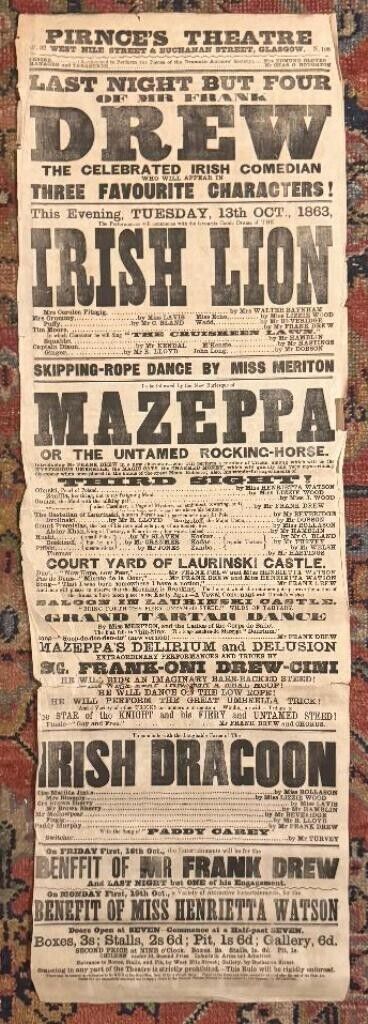
Sold on eBay November 17th, 2024
*BARRYMORE DYNASTY: FRANK DREW RARE LARGE 1863 30 X 10 INCH THEATRE BROADSIDE*
A rare large original 29 1/2 by 10 inch October 1863 theatre broadside for the great Irish-American comic actor Frank Drew, a member of the Drew and Barrymore dynasties and grand-uncle of Lionel, Ethel, and John Barrymore, acting multiple roles at the Prince's Theatre in Glasgow including The Irish Lion and a spoof of Lord Byron's Mazeppa. A few small tears otherwise good condition. See the Drew and Barrymore family's extraordinary biographies below. Shipping discounts for multiple purchases. Inquiries always welcome. Please visit my other eBay items for more early theatre and historical autographs, photographs and programs and great singer, actor and actress cabinet photos and CDV's. From Wikipedia:John Drew (September 3, 1827 – May 21, 1862) was an Irish-American stage actor and theatre manager.Born Jonathan Henry Drewland in Dublin, Ireland, to Thomas L. Drewland and Louise Kanten, he was the fifth of six children. He lived in Templeogue, a poor Irish village in County Dublin during the 19th century. In 1832, John Drew emigrated to the United States with his family to Boston, Massachusetts. As a child he spent most of his life living in Boston. This is where he first got into acting. A younger brother, Frank Drew (1831–1903), also became an actor CareerAfter moving to the United States, Drew got a job in the theatrical company of Joseph J. Johlen (the theatre manager). He appeared in a number of Johlen's plays, including Uncle Mutch, The Barber Man, Canterbury of Livingston and The Progrist.Drew made his first New York appearance in 1846. He played Irish and light comedy parts with success in many American cities, and was the manager of the Arch Street Theatre Personal lifeJohn married Louisa Lane in 1848 this being her third marriage and his first. They had three children, Louisa (1852–1888), John Jr. (1853–1927), and Georgiana (1856–1893), the latter two of whom were accomplished actors (Georgiana married Maurice Barrymore in 1876, begetting the Barrymore family; this makes John Drew a great great grandfather of actress Drew Barrymore).Drew died at his home in Philadelphia, Pennsylvania at the early age of 34, after tripping, falling and fatally hitting his head during a party for daughter Georgiana. He was buried in Glenwood Cemetery in Philadelphia, which was later closed, and his remains were moved to Mount Vernon Cemetery. After his death, his wife Louisa took over the management of the Arch Street Theatre.[2] The Arch Street survived until 1936 when it was demolished.The Barrymore family is an American acting family.The Barrymores are also the inspiration of a Broadway play called The Royal Family, which debuted in 1927. There are many members of the Barrymore family that are not mentioned in this article.List of membersJohn Barrymore as Hamlet in 1922Drew Barrymore at the 2014 Berlin International Film FestivalWilliam Edward Blythe (1818–1873), married Matilda Chamberlayne (1822-1849), they had seven childrenHerbert Arthur Chamberlayne Blythe (aka Maurice Barrymore married Georgiana Emma Drew, and had three children: Lionel, Ethel, and John.Lionel Barrymore Married Doris Rankin (first wife), and had two daughters. Marriage ended in divorce.Mary Barrymore (died in infancy, 2 years old)Ethel Barrymore II (died in infancy).? Married to Irene Fenwick (second wife, until her death)Ethel Barrymore Married Russell Griswold Colt, and had three children. Ethel's children also acted, primarily on the stage.Samuel Peabody ColtJohn Drew ColtEthel Barrymore Colt.? Married John Romeo Miglietta, and had John Drew Miglietta (born 10 September 1946)John Barrymore Married to Katherine Corri Harris (first wife, divorced)? Married Blanche Oelrichs (second wife, divorced), and had:Diana Blanche Barrymore? Married Bramwell Fletcher? Married John R. Howard? Married Robert Wilcox? Married Dolores Costello (third wife, divorced), and had:Dolores Ethel Mae Barrymore (living).? Married Thomas Fairbanks (first husband, divorced), and had:Hillary Klaradru Fairbanks (living),? married Thomas Randolph and had:Isabelle Harrison Barrymore RandolphAnthony John Barrymore Fairbanks? married Dianne Zaninovich and had:Samantha Mae Barrymore Fairbanks.? Married Lew Bedell (second husband) and had:Dore Lewis BedellStephanie Mae BedellJohn Drew Barrymore (Jr.) Married Cara Williams (first wife, divorced)John Blyth Barrymore? Married Rebecca PogrowBlyth Lane Brooke Barrymore? Married Jacqueline ManesJohn Blyth Barrymore IV? Married Gabriella Palazzoli (second wife, divorced)Blyth Dolores Barrymore. ? Married Antonio GioffrediNicole Gioffredi? Married Nina Wayne (third wife, Barrymore (died 2014, accidental overdose)[2]? Married Ildiko Jaid (fourth wife, divorced)Drew Barrymore (b. 1975)? Married Jeremy Thomas (first husband, divorced)? Married Tom Green (second husband, divorced)? Married Will Kopelman (third husband, divorced)Olive Barrymore KopelmanFrankie Barrymore Kopelman? Married to Elaine Barrie née Jacobs. (fourth wife of John Barrymore Sr., divorced)Except for John Drew Barrymore, Diana, Drew, and John Blyth, none of the other members of John Barrymore's family have yet entered the entertainment industry. Most of the spouses however were related to the artistic world, mainly actresses and actors.Drew familyThe family of Georgiana Emma Drew, mother of Lionel, Ethel, and John, also includes a large number of actors.John Drew, actor? Louisa Lane Drew, Emma Drew, ? wife of Maurice Barrymore and mother of Lionel, Ethel, and John.John Drew Jr., 'Uncle Jack' by the Barrymore siblings, married actress Josephine Baker 'Aunt Dodo', daughter of his mother's best friend.Louise Drew, 'Cousin Bee', ? married performer Jack Devereaux; their son John Drew Devereaux(1918 1995) was a Broadway stage managerSidney Drew (paternity debatable), known for the Mr. & Mrs. Sidney Drew comedy act. Married to first wife Gladys Rankin 1890-1914 her death. Wife two was Lucille McVey 1914 to his death in 1919.Sidney Rankin Drew, son of Sidney Drew and Gladys Rankin, left his acting career to join the Lafayette Escadrille, and was killed in actionLouisa Drew (1851–1888), called 'Aunt Wisa' by the Barrymores, moved to Boston, married manager Charles Mendum(1849 1945) had two or ?three children, one of which was Georgie Mendum (..photo of Louisa appears in October 1937 Etsy Magazine layout on the family.)Georgie Drew Mendum (1875–1957), married and divorced from a comedian named George Parsons (married 1903, divorced 1912). Sometimes stayed at the Mamaroneck home of her cousin Ethel Barrymore.Frank Drew (1831–1903), brother of John Drew Sr. (Photo of him appears in October 1937 Etsy Magazine layout on the family)
Sold on eBay August 2nd, 2023
George Gershwin "NINE FIFTEEN REVUE" Ruth Etting / Harold Arlen '30 FLOP Program
This is a rare February 11th, 1930 (Opening Night) playbill from the Original Broadway production of RUTH SELWYN's musical revue "NINE FIFTEEN REVUE" at George M. Cohan's Theatre in New York City. (The production opened February 11th, 1930 and closed after only seven performances.) ..... With musical staging by the legendary BUSBY BERKELY and boasting songs written by GEORGE GERSHWIN, VICTOR HERBERT, HAROLD ARLEN, RUDOLF FRIML, VINCENT YOUMANS, IRA GERSHWIN, KAY SWIFT and others, the revue starred RUTH ETTING, HARRY McNAUGHTON and FRED KEATING and featured JOE and PETE MICHON, PAUL KELLY, CHARLES LAWRENCE, HELEN GRAY, FRANCES SHELLY, LYNNE DORE, MARY MURRAY, GRACELLA and THEODORE, the LOVEY GIRLS, DIANNE ELLIS, MICHAEL TRIPP, WALLY CRISHAN, OSCAR RAGLAND, NAN BLACKSTONE, EARL OXFORD, JAMES HOWKINS, PEPPI LEDERER, LOUISE BARRETT, MARGARETE MERLE, RUTH SELWYN'S SPECIALTY GIRLS: LILLIAN OSTROM, JANE SHERMAN, MARY SAWYER, RUTH GORMLEY, TEDDY WATERS, PAT HASTINGS, THELMA TEMPLE and GINGER MEEHAN and DON VOORHEES and his Orchestra ..... Side Note: The musical introduced HAROLD ARLEN's first big hit, "GET HAPPY", which was performed by RUTH ETTING at the end of Act One (fourth scanned image). Today the song is most associated with Judy Garland, who performed it in her last MGM film Summer Stock (1950). Garland also sang this song with Barbra Streisand in a medley that also included "Happy Days Are Here Again" on "The Judy Garland Show" ..... CREDITS: Music and Lyrics by GEORGE GERSHWIN ("Girl Crazy", "Lady, Be Good!", "Oh, Kay!", "Funny Face", "Rosalie", "Strike Up the Band", "Of Thee I Sing", "Porgy and Bess", "George White's Scandals"), RUDOLF FRIML, VICTOR HERBERT ("Cyrano de Bergerac", "Babes in Toyland", "Mlle. Modiste", "The Red Mill", "Naughty Marietta", "Sweethearts", "Ziegfeld Follies", "Sally", "Gypsy Lady"), VINCENT YOUMANS, ROGER WOLFE KAHN, KAY SWIFT, PHILIP BROUGHTON, WILL B. JOHNSTONE, TED KOEHLER, HAROLD ARLEN ("You Said It", "Cotton Club Parade", "Life Begins at 8:40", "The Show is On", "Hooray for What", "Bloomer Girl", "St. Louis Woman", "House of Flowers", "Jamaica", "Saratoga" and the classic film "The Wizard of Oz"), RALPH RAINGER, RICHARD MYERS, NED LEHAK, MANNING SHERMAN, EDWARD ELISCU, PAUL JAMES, IRA GERSHWIN, IRVING CAESAR and others; Sketches by RING LARDNER, PAUL GERARD SMITH, EDDIE CANTOR, ANITA LOOS and JOHN EMERSON, GEOFFREY KERR, H. W. HANEMANN, ROBERT RISKIN and ADORIAN OTVOS; Sets designed by CLARKE ROBINSON; Costumes designed and executed by KIVIETTE; Orchestra conducted by DON VOORHEES; Dances and Ensembles by BUSBY BERKELEY; Ballets Directed by LEON LEONIDOFF; Sketches Staged by the Authors; Produced by RUTH SELWYN ..... DETAILS: The sixteen page program measures 5 1/4" X 7 7/8" inches and includes full production credits, cast list, scenes and musical numbers and wonderful vintage advertising, but no cast photos or bios ..... CONDITION: With the exception of the date written on the title page, a small spot on the front cover and light edge wear, this rare playbill is in excellent condition and will make a wonderful addition to the collection of any musical theatre aficionado or historian. This item will be carefully packaged in a protective, carded sleeve and backed by stiff cardboard. Pay me securely with any major credit card through PayPal!
Sold on eBay February 21st, 2025